The possibilities of the ketamine analog
The ketamine analog is a legal alternative to ketamine that closely resembles the original in its effects. This drug is not regulated by the Opium Act and can therefore be used during sessions without legal restrictions. Unlike medical ketamine use, which is only available under strict conditions and with a referral, this analog is not considered an official medical treatment. This makes it possible to book a session with this drug without a doctor's referral. This opens the door for anyone who wants to experience what a dissociative session can mean for self-exploration, processing, and personal growth.
Our Ketamine offering
There are several ways to experience the effects of this ketamine analog. Most people choose to book a private session with support before, during, and afterward from a Triptherapie therapist. Another option is to participate in a group session with a medium to high dose or an integration session with a low psycholytic dose.
Ketamine and the difference with its analogue
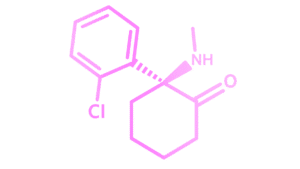
Ketamine is known worldwide as a dissociative agent used in medicine since the 1960s, including as an anesthetic and, more recently, as a treatment for treatment-resistant depression. The legal ketamine analogue is very similar to the original in many ways, both in terms of perception and mechanism of action.
In practice, users find that ketamine has a short, intense effect, while its analogue often has a gradual onset and lasts longer. For therapeutic sessions, the gentler onset and longer duration of action are advantageous. Both substances can lead to profound dissociative experiences and valuable insights.
The naming
Both ketamine and its analogues are known by a variety of names. In addition to the official names such as Ketalar, Ketanest and Ketaset, many informal terms are also used, including Ketamine, K, Ket, Kitty, Special K, Cat Tranquilizer, Vitamin K, Purple and Jet. These diverse names emphasize the widespread recognition and use of this type of agent.
What do you experience when using ketamine?
An experience with a ketamine analog is similar in many ways to that of ketamine itself, as both drugs belong to the same family of dissociatives and operate largely through the same mechanism of action. During such an experience, consciousness can detach from the body and immediate environment, often described as dissociation.
People who experience a session with a ketamine analog often report that the experience feels like stepping outside of ordinary reality. This can range from a mild state of relaxation, where thoughts become more free and emotions more palpable, to a profound shift in consciousness where the body is barely perceptible. Time may feel distorted, the sense of space may change, and visual or inner images may arise, sometimes experienced spiritually or symbolically.
Ketamine therapy
Ketamine is currently used therapeutically in various ways. In conventional medicine, it became known for its use in treatment-resistant depression, where controlled administration can provide relief from severe depression and suicidal thoughts within hours. Ketamine is also being studied and sometimes used for anxiety disorders, PTSD, and chronic pain. Outside of medical settings, a legal ketamine analogue can be used in guided sessions focused on personal growth, emotional processing, and spiritual self-exploration.
What's special about ketamine is that it belongs to the dissociative class. Dissociation involves temporarily disconnecting the normal connection between body, environment, and thought processes. This can be therapeutically valuable. While someone in a normal state often gets stuck in worrying, ruminating on negative thoughts, or endlessly reliving traumas, dissociation causes distance arises. From that distance, one can observe painful emotions or memories without being completely drawn into them.
Moreover, dissociation often opens the door to a different perspective: thoughts and emotions become less rigid, allowing new insights to emerge. Some people experience it as if they are looking at their problems from the outside, with greater compassion and clarity. This can help break deep-seated patterns and create space for recovery and change.
In short, ketamine can be therapeutic because its dissociative nature provides temporary relief from mental and emotional stress, creating space for emotional processing, reappraisal of experiences and breaking through ingrained thought patterns.
Frequently asked questions about ketamine
Ketamine and its analogues are not for everyone. At Triptherapie we accept new clients if they are complete intake form. This way we can check for contraindications and, if necessary, inform you about alternatives.
While ketamine and its legal analogues offer interesting possibilities, there are circumstances and combinations where use is unsafe or strongly discouraged. People with psychosis sensitivity (such as schizophrenia), a serious heart condition or unstable high blood pressure are at increased risk. Also during pregnancy and breastfeeding use is not recommended.
In addition, there are significant interactions with other drugs that can be dangerous. Combining ketamine or an analog with the following drugs is strongly discouraged:
Amphetamines (such as speed or dexamphetamine)
Cocaine
Benzodiazepines (such as diazepam, oxazepam, alprazolam)
MAO inhibitors (MAOIs)
Trazodone
Tramadol
Alcohol
GHB
GBL
- Opioids (such as morphine, oxycodone, fentanyl)
These combinations can lead to dangerous side effects, such as respiratory depression, heart problems, seizures or unpredictable changes in consciousness.
It is therefore very important to discuss all medication and substance use openly and honestly during the intake, so that a session can take place safely.
A k-hole is the term for a profoundly dissociative experience that can occur when using a high dose of ketamine or a similar drug. In this state, the connection to one's own body and immediate surroundings is largely severed. Many people describe this as a complete out-of-body experience, feeling as if they have entered another dimension, space, or state of consciousness.
Symptoms of a K-hole can include loss of bodily control, a sense of disembodiment, an altered or absent sense of time, intense inner or visual experiences, and sometimes existential or spiritual insights. For some, it feels like a near-death experience or a journey through abstract worlds.
While some users seek out a K-hole for its intensity and potential insights, it can also be confusing, overwhelming, or even frightening. The loss of control and lack of support means that a K-hole is best explored only in a safe, supervised setting.
General FAQ
Looking for a different question and answer? You can also use the search function on our site, consult the FAQ section, ask a question in our forum, or ask our chatbot, Trippy.
The recent questions from the Q&A
How do you book a psilocybin (truffle) ceremony?
What is the best way to book a psilocybin truffle ceremony?
What is the cheapest psychedelic session or retreat?
What is the cheapest option for a psychedelic session?