
What is psilohuasca?
During a psilohuasca ceremony, psilohuasca is served, which induces a psychedelic journey. Psilohuasca is a unique combination of psilocybin-containing truffles or mushrooms and the vine used in ayahuasca, Banisteriopsis caapi. Psilocybin itself is a powerful psychedelic substance that can induce altered states of consciousness that can promote healing, growth, and transformation. Psilocybin can help you access your subconscious, release emotional blockages, gain insights, and connect with your true self. Adding the MAO inhibitor Banisteriopsis caapi can enhance the effects of psilocybin by prolonging, deepening, and clarifying the trip.
Spiritual effects of psilohuasca
Those who prefer psilohuasca over the truffle ceremony are often seeking spiritual and mystical experiences. Firstly, psilohuasca ceremonies often contain higher doses of psychedelic substances than truffle ceremonies. The potentiating effect of the added MAO inhibitor on top of psilocybin also contributes to the depth of the trip. Furthermore, Banisteriopsis Caapi holds a sacred status in various cultures and is often used in religious and spiritual rituals. Clients often choose the psilohuasca ceremony with the intention of having a mystical experience. We then help tailor the preparation to a spiritual nature. A minor disadvantage of psilohuasca is the additional physical discomfort.
Free choice of psilohuasca, psiloflora or psilocybin
During our truffle ceremonies, we offer everyone the option of adding truffles. For example, we can transform any truffle ceremony into a psilohuasca ceremony by adding Banisteriopsis Caapi. Psiloflora is also an option, as we add Passiflora Incarnata. For those who prefer not to have truffles or who are unable to due to medication, we can increase the psilocybin dosage so that the truffles aren't even necessary to induce a strong and deep trip. When booking a ceremony, it's helpful to let us know your preferred combination so we can provide appropriate dietary advice.
Difference between psiloflora and psilohuasca ceremony
Psilocybin is responsible for the hallucinogenic effects of both psiloflora and psilohuasca. MAOIs, or monoamine oxidase inhibitors, are substances that slow the breakdown of certain neurotransmitters in psychedelics, allowing them to remain active for longer and thus have a greater effect. Both psilohuasca and psiloflora are combinations of psilocybin and an MAOI, used for spiritual and therapeutic purposes. The combination of psilocybin and MAOI amplifies and prolongs the effects of psilocybin, allowing the user to experience deeper and more intense experiences. Rich and intense visual hallucinations are often cited as an added benefit.
Psilohuasca is prepared by combining psilocybin-containing mushrooms or truffles with an MAOI-containing plant often used in ayahuasca, Banisteriopsis Caapi. Psiloflora is prepared by combining psilocybin with the milder MAOI from the passion flower, Passiflora Incarnata. This has the advantage over psilohuasca that psiloflora has fewer risks of raising blood pressure, causing interactions with other medications or foods, and causing physical discomfort. Psiloflora also doesn't require a strict diet before or after consumption, as psilohuasca does. Psiloflora is therefore gentler on the body and has a lower risk of complications.
The power of the passion flower
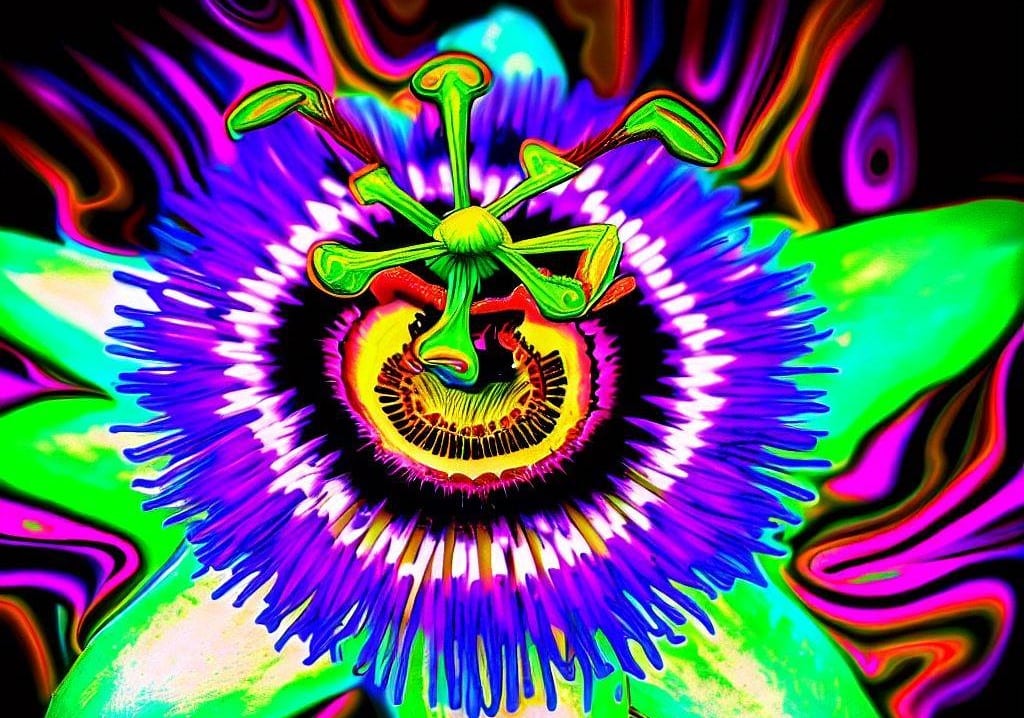
Passionflower has been used for centuries by Native Americans as a sedative and soporific. It was also introduced to Europe as a folk remedy for anxiety, nervousness, insomnia, and epilepsy.
Passion flower is beneficial for health because it contains various bioactive compounds that have a beneficial effect on the nervous system, the cardiovascular system, the immune system and the skin.
The main MAOIs in Passiflora incarnata are harman, harmin, harmaline, harmol, and harmalol. These substances are structurally similar to serotonin and can bind to the serotonin and GABA receptors in the brain. This produces a calming, relaxing, and antidepressant effect. These indole alkaloids primarily inhibit the MAO-A subtype, which is involved in the breakdown of serotonin and norepinephrine.
Another MAOI in Passiflora incarnata is chrysin, a flavonoid that also has anti-inflammatory and antioxidant properties. Chrysin primarily inhibits the MAO-B subtype, which is primarily involved in the breakdown of dopamine and phenylethylamine. This gives chrysin a stimulating, cognitive-enhancing, and neuroprotective effect.
Psiloflora versus psilocybin
Psilocybin is considered the psychoactive compound responsible for psychedelic effects. Although psilocybin has a psychoactive effect, it is relatively minor compared to psilocin. Psilocin is found in smaller quantities in magic mushrooms and truffles but oxidizes more quickly than psilocybin. Most of the effects come from psilocybin being converted into psilocin after ingestion. This process occurs when psilocybin is metabolized by the body. This process removes a phosphate group from one molecule, resulting in the formation of psilocin.
Psilocin has a similar structure to psilocybin and serotonin and can easily cross the blood-brain barrier. This allows it to bind to serotonin receptors in the brain, leading to its hallucinogenic effects.

After being converted from psilocybin, psilocin is more susceptible to the oxidation processes catalyzed by naturally occurring MAO enzymes. Oxidized psilocybin and psilocin lose their psychoactive effect. An MAO inhibitor, such as that found in passion flower, keeps these MAO enzymes occupied, allowing psychedelics to remain active for longer, and requiring relatively less of them. An additional advantage of psiloflora is the aforementioned calming effects, which provide a calm, dreamy trip.
Contraindications psilohuasca
Psilohuasca has more contraindications than psilocybin alone. We must first assess its suitability for our participants. First, the contraindications for psilocybin remain valid, as psilocybin is a component of the mixture. In addition, there are restrictions on the use of strong MAO inhibitors.
- Pregnancy
- Kidney diseases
- Diabetes
- Epilepsy
- Neurological disorders
- High blood pressure
- Cardiovascular diseases
- Brain hemorrhages
- Adrenal complaints
- Abnormal blood cells
- Schizophrenia
- Psychosis sensitivity
- Borderline
- SSRi: citalopram (Cipramil®) – escitalopram (Lexapro®) – fluoxetine (Prozac®) – fluvoxamine (Fevarin®) – paroxetine (Seroxat®) – sertraline (Zoloft®) etc…
- SNRi: Venlafaxine (Effexor) – Duloxetine (Cymbalta) etc…
- TCA: mitriptyline (Tryptizol®) – clomipramine (Anafranil®) – imipramine – nortriptyline (Nortrilen®) etc….
- Benzodiazepines: oxazepam (Seresta), – diazepam (Valium) – alprazolam (Xanax) etc…
- Anti-asthmatic agents
- High blood pressure remedies: (methyldopa, guanethidine, reserpine)
- Buspirone
- Levodopa
- Opioids (especially dextromethorphan (found in cough syrup, among other things), tramadol!) morphine and codeine
- Cold, nasal and cough remedies (if they are available) dextromethorphan or sympathomimetics (contain) (Otrivin® ea)
- Sibutramine (remedy for obesity)
- Sympathomimetics. (amphetamines, cocaine, methylphenidate (Ritalin®, Concerta® and Equasym®), dopamine, adrenaline, norepinephrine, isoproterenol)
- Psychedelics such as LSD, MDMA, Ketamine and all other mind-altering substances
- Weed or Marijuana
- Amphetamines
- Anesthetic agents
- Ephedra and other strong weight loss agents
- Iboga/Ibogaine (stop taking it a month in advance)
Psilohuasca/Ayahuasca diet
The MAO inhibitors in ayahuasca and psilohuasca can become problematic when combined with various foods. We recommend following a tyramine-restricted diet. Tyramine can be a problem with strong MAO inhibitors. In the case of psiloflora, adjusting the diet is not necessary, but it is recommended.
Tyramine
Tyramine plays a role in regulating blood pressure. Too much tyramine in your blood can cause high blood pressure, resulting in symptoms such as headaches. Normally, this doesn't bother you because certain enzymes break down tyramine. These enzymes are collectively known as monoamine oxidase, abbreviated to MAO. Consuming large amounts or strong MAOIs can increase tyramine levels and pose a health risk.
Tyramine can be formed by bacteria. Bacteria form it from the amino acid tyrosine, which is a building block of various proteins. In products containing proteins that are stored or aged, the tyramine content increases due to the breakdown of tyrosine into tyramine. Therefore, aged cheese contains much more tyramine than young cheese. Other food processing, including fermentation, yeasting, and smoking, also increase tyramine content.
Tyramine-restricted diet
Avoid the following foods for the 3 days before the ceremony:
- Vegetable: sauerkraut
- Herbs: licorice, St. John's wort and ginseng.
- Meat: raw, smoked or cheese-prepared meat and fish.
- Sliced meats: sliced and processed meats
- Dairy: cheese, unpasteurized milk
- Seafood: trassie
- Bread: sourdough bread
- Soy products: tempeh, soy sauce, fish sauce, Tamri and Worcestershire sauce
- Drink: herbal tea with St. John's wort and/or liquorice.
- Alcoholic beverages. All alcoholic beverages.
- Yeast: No Marmite, Tartex, brewer's yeast, bread drink or Maggi.
- Ready-made: Everything that is not fresh every day.
Registration for psilohuasca ceremony
We ask every participant in psychedelic ceremonies to complete an intake form. We ask for medical information and intentions, and the intake includes a neurotransmitter test. We will review the information you provide and, if we discover any contraindications, we will notify you. In some cases, with minor adjustments, it is still possible to participate in the psilohuasca ceremony with or without the addition of Banisteriopsis Caapi or passion flower.
We create a personal preparation and lifestyle plan after a ceremony reservation has been made. We also use the information provided during the online intake for this.