Information MDMA analogue
As of July 1, 2025, we will no longer be able to supply MDMA analogues
On this page, we provide more information about the MDMA analog that we previously offered at Triptherapie as a legal alternative to utilize the therapeutic effects of MDMA.
Read on to find out what the risk profile is and which sessions we offer.
Disclaimer legislation
Opium Act
MDMA is an illegal drug that falls under the Opium Act (Schedule 1). According to the Opium Act, the substances listed on Schedule 1 are hard drugs; Substances that, according to the government, pose an unacceptably high risk and have no medical benefit. This means that the possession, production, sale, and use of MDMA are punishable in the Netherlands. Because we use an analogue that is not listed on this list, we can work legally with this substance. Under current legislation, these MDMA sessions/therapy sessions are not yet covered by the Medicines Act and are not considered medical treatment. Therefore, reimbursement by health insurers is not possible.
Experimental phase
MDMA, ecstasy, and their analogs are widely used worldwide. While most users don't experience immediate problems, little scientific research has been conducted on their long-term safety. Long-term MDMA use can increase the risk of depression, anxiety, and memory problems. Much of this research is limited to animal studies, and few clinical trials have been conducted on the safety of chronic MDMA use in humans. Studies of recreational users suggest that MDMA is safer than other substances such as alcohol, cocaine, and marijuana.
Which MDMA analogue?
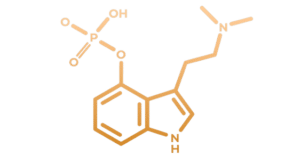
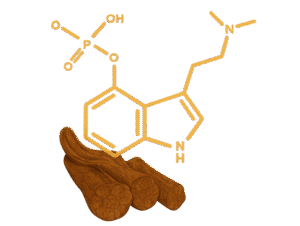
It is not possible to provide the exact substance name of the MDMA analog we use to protect its legal status. Providing the exact name could allow authorities and law enforcement to place the substance in Schedule 1 of the Opium Act. Therefore, the substance's identity must be protected, and other ways must be found to provide the necessary information without revealing the specific chemical component used. This substance's class is entactogen, also sometimes called empatogen.
How MDMA Analog Works
The analog affects various areas of the brain and various neurotransmitters and neuropeptides. The changes in mood and perception arise from the changing neurochemistry in various areas.
Increased neurotransmitters (monoamines)
Like MDMA, the analog increases the serotonin and dopamine levels in the brain by two similar mechanisms: stimulating the release and inhibiting the reuptake of these neurotransmitters.
MDMA acts as a substrate for several monoamine vesicular transporter proteins and thereby stimulates the release of serotonin (5HT), dopamine (DA) and noradrenaline. These neurotransmitters are stored in small vesicles within nerve endings and are released into the synaptic cleft (the space between neurons) when an electrical signal is transmitted. MDMA causes more of these neurotransmitters to be released than normal, creating a surplus in the synaptic cleft.
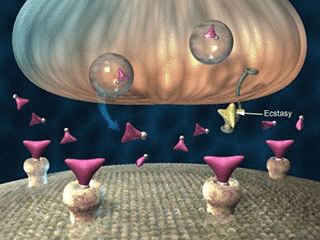
MDMA also reverses the normal transporter flux, increasing the release of all three monoamines via reverse transport. Transporters are proteins located on the cell membrane of neurons that help reabsorb and recycle neurotransmitters after transmitting their signals. MDMA binds to these transporters and causes them to work in reverse, pushing more neurotransmitters out of the cell instead of bringing them back in.
Through these two mechanisms, MDMA increases serotonin and dopamine levels in the brain, leading to various psychological and physiological effects. Serotonin influences mood, memory, sleep patterns, pain perception, and social behavior, among other things. Dopamine plays a role in the reward system, motivation, learning ability, movement, and pleasure. MDMA therefore produces feelings of euphoria, empathy, energy, alertness, and heightened sensory perception.
Increased neuropeptides
MDMA also increases oxytocin activity by interacting with serotonin 5-HT1A receptors. These serotonergic receptors are widely distributed throughout the brain, including the amygdala and prefrontal cortex, and influence various functions such as mood, anxiety, cognition, and social behavior. Oxytocin is considered the cuddle hormone because it allows people to connect. Other neuropeptides that are increased are neuropeptide Y, endorphin, dynorphin, vasopressin and BDNF.
Metabolism MDMA analog
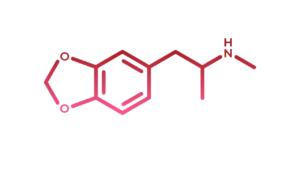
MDMA is metabolized in the liver by cytochrome P450 enzymes, primarily CYP2D6, to form methylenedioxyamphetamine (MDA). MDA is an active metabolite that also has psychoactive effects and is present in nutmeg. MDMA and MDA are then further metabolized by catechol-O-methyltransferase (COMT) and sulfotransferases (SULTs) to form various hydroxylated and sulfated metabolites, such as 4-hydroxy-3-methoxymethamphetamine (HMMA), 3,4-dihydroxymethamphetamine (DHMA), DHMA 3-sulfate, and DHMA 4-sulfate.
MDMA's volume of distribution is considered large, meaning it distributes throughout body tissues and doesn't simply remain in the blood. MDMA and its metabolites are primarily excreted through the kidneys, with 75% as unchanged MDMA and 7% as MDA. The half-life of MDMA is approximately 7-9 hours, meaning it takes about that amount of time for half of the ingested dose to be eliminated from the body, and it can even take 48-72 hours for activity to be considered nil.
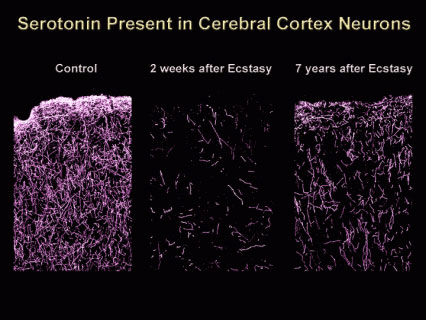
MDMA metabolism is influenced by several factors, such as genetic variation in CYP2D6 enzyme activity, interactions with other drugs that utilize or inhibit the same enzyme, dose and frequency of use, and the purity and composition of the drug. MDMA metabolism may also play a role in the drug's potential neurotoxicity, as some metabolites can react with reactive oxygen species or other molecules to damage serotonergic neurons.
Recovery time after use
Due to the neurotoxicity and depletion of various neurotransmitters, such as dopamine and serotonin, it is advisable to establish a recovery period. Therapeutic use of MDMA and its analogues does not involve doses as high as those seen in recreational use. The higher purity and relatively lower dosage result in fewer harmful effects. To reverse the neurotransmitter depletion, a recovery period of at least one month is recommended. For both the recovery of serotonergic receptors and the reduction of neurotoxicity, we estimate the best break between sessions to be between one and two months, depending on the user's age and metabolism.
The same risk profile as MDMA
95% Same progression
After taking the MDMA analog, the effects of 95% are similar to those of MDMA. A subtle difference is the slightly longer duration of action and a lower dopamine depletion compared to MDMA. According to various experts, this makes the MDMA analog more suitable for therapeutic settings and less suitable as a party drug.
Interactions
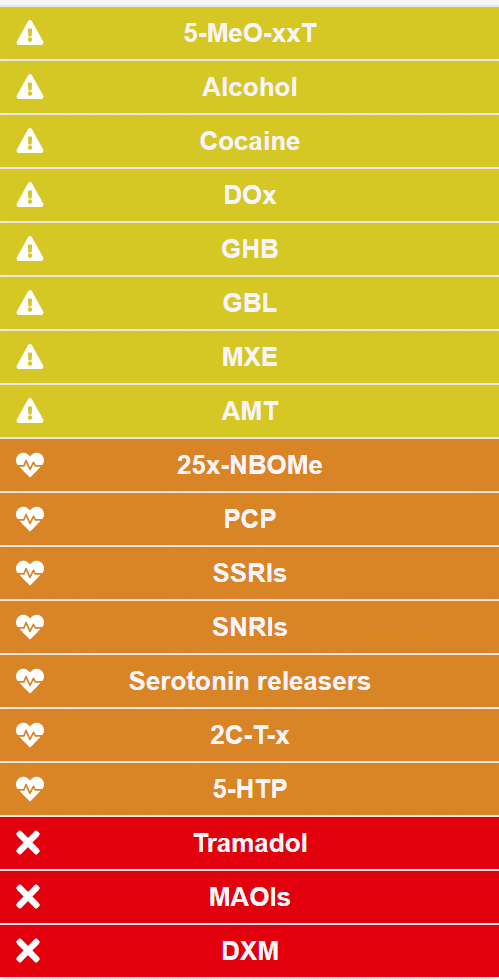
Although MDMA and its various analogues are relatively safe, their use can lead to various adverse side effects and risks, especially when combined with other drugs or substances. Below is an overview of dangerous interactions for MDMA:
– MDMA in combination with antidepressants can lead to serotonin syndrome, a potentially life-threatening condition that can cause severe muscle cramps, fever and delirium.
– Mixing MDMA with alcohol can increase the toxicity of the drug, increasing the risk of dehydration and overheating.
– MDMA in combination with other stimulants, such as cocaine, may increase the risk of cardiovascular complications, such as palpitations.
– Using MDMA in combination with other drugs such as LSD, magic mushrooms or ketamine can lead to risks of a bad trip, which can increase psychological stress and anxiety.
Contraindications
There are more contraindications than those mentioned above. MDMA use is not recommended, among other things, when taking medications that interact with the CYP2D6 enzyme, medications listed in the interaction table, heart conditions, liver problems, borderline personality disorder, schizophrenia, psychosis sensitivity, and during pregnancy.
Interaction table
Our offer
As of July 1, 2025, we will no longer be able to provide analog MDMA. We can only facilitate sessions if someone brings their own MDMA. Therefore, we will no longer offer group sessions with MDMA analog.
We are not responsible for the quality of the MDMA you bring yourself.
Review the information below and decide what fits best.
MDMA ceremony
An MDMA ceremony has a maximum of five participants and two facilitators. This group session is for those who find added value in the connection within the group.
We can facilitate this if you bring your own MDMA.
MDMA session
A MDMA session is guided individually. With more attention to the individual and always a listening ear, an individual session offers more space for expression.
MDMA therapy
MDMA therapy and an MDMA session are different terms for the same thing. At Triptherapie, we always offer personalized preparation and integration into the process.