
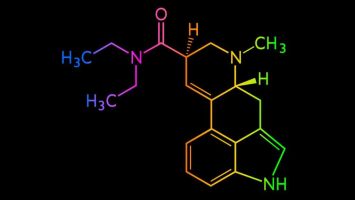
LSD is the strongest psychedelic
LSD (lysergic acid diethylamide) is considered one of the most powerful psychedelics due to its potency, duration, and effects. Here are some reasons why LSD is considered the strongest of all known psychedelics:
- Potency: LSD is very potent and can produce a very powerful effect at doses of just a few micrograms (µg). For example, a typical LSD dose is around 100-200 µg, while the effects of psilocybin are usually felt at doses of 10-30 mg and DMT at doses of 10-60 mg. This means that LSD is approximately 500 times more potent than psilocybin and DMT.
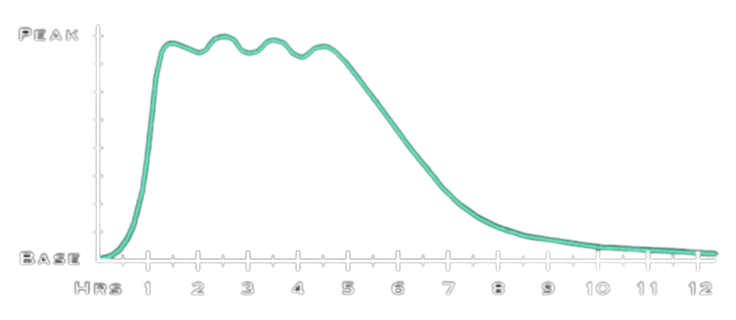
- Trip duration: LSD trips can last up to 12 hours, while psilocybin and DMT are typically shorter. This prolonged effect can make the LSD experience deeper and more intense than that of other psychedelics.
- Effects: LSD is known for its ability to produce extremely intense and complex visual, mental, and emotional effects. These effects can vary significantly from person to person. The most common effects include alterations in perception, heightened introspection, mystical experiences, and strong emotional reactions. These intense effects make LSD a unique and potentially overwhelming experience.
The reason LSD has such a strong and long-lasting effect is that it fits into the same receptors as DMT and psilocybin, but the shape of the molecule makes it difficult to escape. Furthermore, the liver can break down LSD slowly, and these breakdown products are excreted in the urine. This is different from DMT and psilocybin.
LSD acts on receptors in the brain
The effects produced are primarily related to the serotonergic receptors. These 5-HT receptors are distributed throughout the brain, and when LSD binds to these receptors, it alters the conduction of impulses in the brain. LSD has an affinity for these receptors:
- 5-HT2A receptorLSD primarily binds to this receptor, which is involved in regulating perception, cognition, emotion, and consciousness. Stimulation of this receptor by LSD can lead to changes in visual perception, intensified emotions, and altered consciousness. It can also increase activity in the prefrontal cortex, which can lead to changes in thinking and a sense of connection to the environment.
- 5-HT1A receptor: LSD can also bind to this receptor, which is involved in regulating anxiety, depression, and mood. Stimulation of this receptor can lead to a reduction in anxiety and depression, although it is unclear to what extent LSD stimulates this receptor.
- Other 5-HT receptors: LSD can also stimulate the 5-HT1D, 5-HT5A, and 5-HT6 receptors. Although the precise effects of this stimulation are not yet fully understood, it may be related to LSD's anxiolytic and antidepressant effects.
Increased glutamate and BDNF as a result of LSD
Besides the effects a person may experience, chemical messengers in the brain change during the use of psychedelics like LSD, DMT, or psilocybin. Increased stimulation of the 5-HT2a receptor leads to the release of glutamate and BDNF.
Glutamate
Glutamate is the main excitatory neurotransmitter in the brain and plays a crucial role in communication between nerve cells. When increased glutamate is released, it can lead to increased synaptic plasticity and the formation of new synapses between nerve cells. This, in turn, can lead to improved cognitive functions, such as learning, memory, and information processing. However, glutamate deficiency is rare and is typically only observed in neurological or psychiatric disorders.
BDNF
BDNF is a neurotrophin that promotes the growth and survival of nerve cells. It is often considered a key factor in neuroplasticity and can help strengthen synapses between nerve cells. Increased BDNF release in the brain can lead to improved cognitive function and the brain's ability to process and learn new information. BDNF is also associated with protecting neurons from degeneration and promoting neurogenesis, or the growth of new nerve cells.
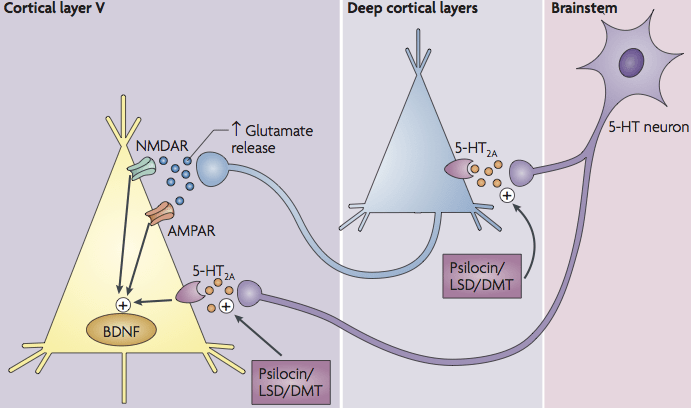
Overall, the release of glutamate and BDNF in the brain can lead to improved cognitive function and the brain's ability to adapt to new environments and situations. This could be beneficial, for example, in the treatment of conditions such as depression, where reduced synaptic plasticity and BDNF levels have been observed.
The image above shows the mechanism by which psychedelics influence neurochemistry and neurotransmission. BDNF plays a significant role in treating depression, particularly in men, but also in women. Increased BDNF and glutamate could theoretically alleviate symptoms of some neurodegenerative disorders such as MS and Parkinson's.
The LSD experience
The experience someone has on LSD depends on the person using it, the circumstances, and most importantly, the dosage. A very low dose of LSD will produce little to no change, while a dose of 200 micrograms can induce a full-blown trip. The higher the dosage, the more pronounced the effects and, consequently, the trip level.
More information: Psychedelics and triplevels
LSD session as therapy
Curious about how we use LSD sessions as therapy? Then explore one of the pages below.