

Supplements that work against stress, anxiety and depression
When nutrition isn't enough to combat stress, anxiety, or depression, we can always use supplements that can alleviate or treat depression. Stress and anxiety are the same for the body and are often linked to depression.
How the supplements against stress, anxiety and depression work
In most cases, increasing serotonin levels can help combat depression. Doctors often do this with medication (which has side effects), while naturopaths and herbalists look at nutrition, herbs, and supplements. The following supplements can help with various types of depression.
The production of serotonin
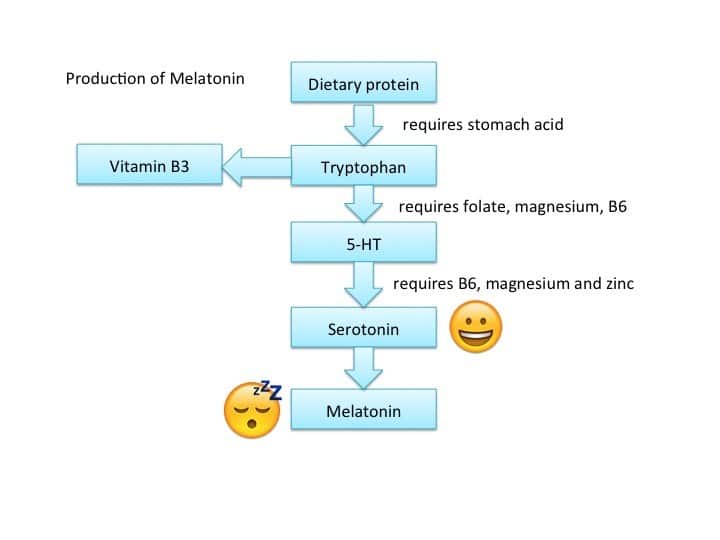
Below you can see how serotonin is formed. All the substances listed are essential and can be obtained from food or supplemented with supplements to be on the safe side.
Tryptophan
Tryptophan is the amino acid that serves as a building block for serotonin. Tryptophan is absorbed better when no other amino acids (building blocks of proteins) are present. Tryptophan is taken before bed.
Magnesium
Magnesium citrate is the most absorbable form of magnesium. Besides forming serotonin, magnesium is involved in thousands of other biochemical processes. Take the extra magnesium citrate before bed.
Multivitamin
To meet all the B vitamins and zinc needed for serotonin production, we recommend Animal Pak. Animal Pak is a high-dose multivitamin and contains many other vitamins and minerals that are beneficial for your health. Half a dose per day is sufficient. Animal Pak is available in powder form or as pills. You can take the pills every other day. You can take half the powder dose per day. Athletes are advised to take a full dose before exercising.
Vitamin D
Vitamin D is already included in Animal Pak, but the intake could be slightly higher, especially in winter. In summer, the body produces some vitamin D itself in the sun. If there's little summer sun, take the extra vitamin D (100 micrograms before bed).
DHA and EPA
DHA and EPA are omega-3 fatty acids commonly found in fish oil and krill oil. DHA and EPA are involved in serotonin release and sensitivity. Omega-3s with DHA and EPA are taken before bedtime. Krill oil contains less DHA and EPA per gram, but in their present form, they reach the brain more effectively. Krill oil is more effective for combating depression, and the daily dose is 2 grams.
SAMe
SAMe increases serotonin, dopamine, and norephedrine. The dosage is 500mg twice a day.
GABA
GABA is recommended to combat anxiety associated with depression. The daily dose is 250 mg.
5-HTP
5-HTP is a precursor to serotonin and can be taken if tryptophan conversion or absorption is suboptimal or to increase serotonin levels through supplementation. The recommended dosage is 100mg three times daily.
Saffron
Saffron works against depression by inhibiting inflammation, reducing oxidative stress, regulating the stress response (hypothalamic-pituitary-adrenal axis), stimulating GABAergic (gamma-aminobutyric acid) neurotransmission and inhibiting reuptake of monoamine neurotransmitters (dopamine, norepinephrine, serotonin) in the brain. 50 mg of saffron extract per day is a high dose with a positive effect against depression.
Rhodiola
Rhodiola improves mood by regulating the activity of monoamines such as serotonin, dopamine, and norephedrine. Rhodiola improves serotonin levels in the hippocampus and repairs damage to neurons. The active ingredients rosavin and salidroside reduce depression by improving the transport of tryptophan and 5-HTP. The recommended dosage is between 500 and 750 mg per day.
Phenylalanine & Tyrosine
Phenylalanine and tyrosine are amino acids that are probably not needed as a supplement if sufficient protein is consumed. They do play a role in depression, but a protein supplement like whey contains sufficient phenylalanine and tyrosine (read more about this here). amino acids against depression).
N-acetyl cysteine (NAC)
N-acetyl cysteine isn't found in our diet, but the body produces it from L-cysteine. In some cases of depression, insufficient N-acetyl cysteine is produced from L-cysteine, and NAC supplementation is a solution.
The daily dose of N-acetyl cysteine (NAC) is 1000 mg, and the therapeutic dose is approximately 2000 mg. It is best taken on an empty stomach with water.
Caution with medication. N-acetyl cysteine (NAC) may increase the effects of antidepressants, nitroglycerin, and anticoagulants. Consult your doctor first if you are taking any medication.
Acetyl-L-carnitine (ALCAR)
Acetyl-L-carnitine is particularly effective against depression and inflammatory diseases. Acetyl-L-carnitine (ALCAR) increases serotonin synthesis (low serotonin actually leads to depression) and improves the functioning of mitochondria, the energy factories in cells, thus preventing depression due to exhaustion.
The recommended dosage is 1 to 3 grams per day and on an empty stomach, preferably not in the evening.
Caution with medication. Acetyl-L-carnitine (ALCAR) may increase the effects of antidepressants, nitroglycerin, and anticoagulants. Consult your doctor first if you are taking any medication.
Creatine
Creatine helps cells store and recover more ATP, the energy they need. This reduces the rate of energy-intensive cells like muscles and nerve cells in the brain, and reduces the risk of complications like depression due to oxidative damage and/or energy depletion. The recommended dose of creatine is 5 grams of creatine monohydrate per day.