
BDNF stands for Brain-Derived Neurotropic Factor
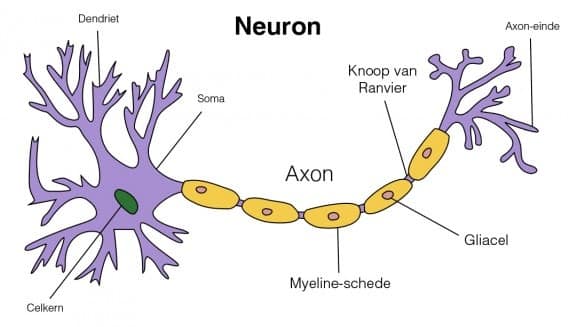
Brain-derived neurotrophic factor, BDNF, is a neurotrophin. Neurotrophins are important for the survival, repair and growth of neurons. Neurons are nerve cells that process, transmit or process information in the brain or nervous system. Neurons can be seen as the data cables between parts of the brain and the body. An average body has roughly 100,000,000,000 neurons (100 billion).
Too little BDNF
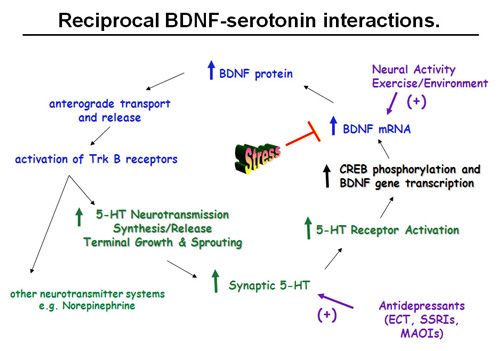
A lack of neurotrophins such as BDNF contributes to the development of neurodegenerative disorders. The lack of BDNF ensures that neurones are unable to recover from damage. This can cause Alzheimer's, Parkinson's and/or Huntington's disease to develop. Furthermore, depression can occur when there is an insufficient amount of BDNF present for a longer period. The degeneration of neurones in the frontal lobe of the brain appears to be the culprit here. Additionally, a low serotonin level partly contributes to depression. The depression is exacerbated because a low serotonin level, via the 5-HT2A receptor, ensures that insufficient BDNF is released (see also the image below, bearing in mind that the 5-HT receptor is little or not stimulated).
More BDNF
Producing more BDNF can therefore be achieved by stimulating the 5-HT receptor. When the body releases more BDNF, it flips the switch on a series of genes that grow brand new brain cells and nerve cell connections. What is more, higher BDNF ensures that you learn faster, remember better, age more slowly, and that your brain quickly rearranges connections between the various parts of the brain and the body.
BDNF also increases the plasticity of your brain. When your brain cells become damaged or end up in a stressful situation, BDNF protects them and helps them to bounce back stronger. The neural pathways become more flexible rather than breaking down, which could explain why higher levels of BDNF are associated with warding off depression.
With a few changes to daily habits, the brain can be primed to release increasing amounts of BDNF, making the brain more resilient and stronger in the face of life's inevitable setbacks.
BDNF and serotonin
So more serotonin leads to an increased release of BDNF via the 5-HT2A receptor. If we look at how we can stimulate the serotonin receptor more, we therefore need to look at how we can increase serotonin and how we can keep the receptor sensitive to stimulation.
Please also see our previous message regarding increase serotonin for more tips
Nutrition and lower BDNF
The food below is known to trigger inflammatory reactions and lower serotonin, which also causes BDNF to drop.
Sugar: Eating sugar, and fructose in particular, directly inhibits the production of BDNF and causes cognitive decline. Fructose together with glucose in one molecule is what we call table sugar. Avoid added sugar as much as possible. Sugar also causes inflammatory reactions in the body, which results in less serotonin being released.
Bad fats: Bad fats cause inflammatory reactions in the body and this, via inflammatory factors, leads to a reduction in the release of serotonin. The bad fats are typically plant-based omega-6 fats used for cooking, such as sunflower, soybean and peanut oil. Hydrogenated (vegetable) fats are also bad fats.
Dairy: In high intakes, dairy can also have a pro-inflammatory effect. It is best not to consume sweetened or non-acidified dairy. Therefore, unsweetened kefir or yoghurt can be eaten in moderation.
Gluten: Eat as few grain-based products as possible. Gluten can also cause inflammation, especially in allergic reactions. Oats and therefore porridge can be eaten, however.
Alcohol: Alcohol is fermented sugar and is best avoided altogether. If alcohol is consumed nonetheless, half to a whole glass of wine a day can be drunk without too much harm. Beyond that, alcohol becomes a pro-inflammatory agent.
Meat: Wild, grass-fed meat and wild fish are not a problem provided red meat is eaten in moderation (the recommendation is a maximum of twice a week). All fish that is not wild-caught or has been fed other than naturally is best avoided. Grain- and corn-fed animal products are also discouraged.
Nutrition and higher BDNF
All anti-inflammatory food and nutrients indirectly help to increase BDNF. All antioxidants, polyphenols and omega-3s are therefore BDNF-increasing. The building blocks of serotonin must of course also be present in the diet. Below is the BDNF-increasing food.
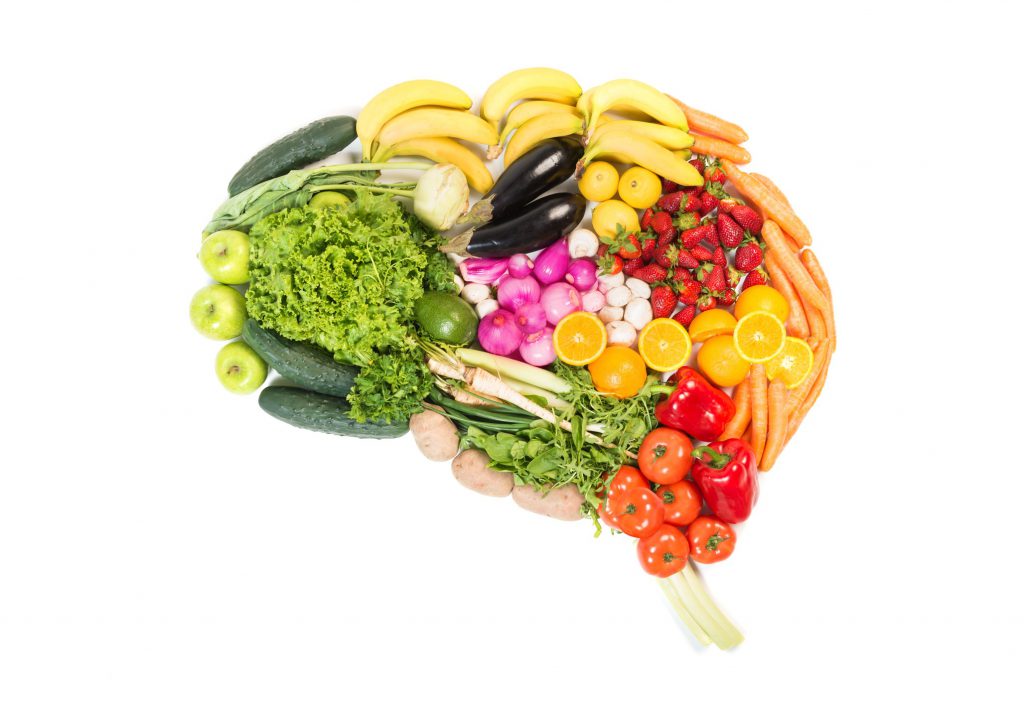
Complex carbohydrates: Complex carbohydrates are slowly digestible and ensure a stable blood sugar level, which means less insulin is needed. This prevents insulin insensitivity and thereby various inflammatory responses in the body. Furthermore, most sources of complex carbohydrates also contain plenty of antioxidants and dietary fibre. It is advisable to make half of all food vegetables, with 2 pieces of fruit per day and a little oats. In addition, a handful of nuts a day can have a positive effect on serotonin production.
Omega-3: Omega-3 fatty acids DHA and EPA play an important role around the serotonin receptor. For example, EPA is an important anti-inflammatory agent, and DHA makes the cell membrane of the 5-HT receptor more sensitive to serotonin. Foods rich in DHA and EPA are fish, shellfish, and crustaceans. Algae and krill also contain a lot of EPA and DHA, and the human body can also produce them from the omega-3 fatty acid ALA, which is abundant in linseed oil and walnut oil.
Omega-6: Where we get omega-6 in abundance and actually need to limit our intake, GLA (gamma-linolenic acid), an omega-6 fatty acid, can actually help us against inflammation. The body can only produce this uncommon omega-6 fatty acid to a limited extent. Supplementation is possible with borage oil (Borago officinalis), evening primrose oil (Oenothera biennis) or blackcurrant seed oil (Ribes nigrum).
Polyphenols and antioxidants: Antioxidants, and polyphenols in particular, work very well against the oxidation of body molecules because they can absorb free radicals such as free oxygen. In this way, the body prevents inflammation caused by oxidation (just as iron can rust). Almost all natural plant-based foods are packed with polyphenols and antioxidants. The better a foodstuff neutralises free radicals, the higher its ORAC value, which stands for Oxygen Radical Absorbance Capacity.
Tryptophan-rich food: Tryptophan is the precursor to 5-HTP and serotonin and therefore has to be obtained through diet. Foods high in tryptophan include porridge, nuts, seeds, spirulina, cocoa (dark), sesame seeds, chickpeas, spinach, sunflower seeds, parsley, asparagus, mushrooms, broccoli, beans, nuts, seeds, soya beans, and turkey.
Vitamin B: Vitamins B3, B6 and B12 are cofactors in the formation of serotonin. Foods that can provide these B vitamins are (grass-fed) meat, fish, (fermented) dairy, wholegrain cereals, vegetables, fruit, potatoes, pulses, eggs, and (cashew) nuts. A vegan should take a B12 supplement because B12 only occurs in animal products.
Minerals: Minerals such as zinc, iron and magnesium play an important role in a great many biochemical processes in the body, including the formation of serotonin. Eat as much vegetables as possible and if you boil vegetables, cook them for as short a time as possible. Combine with as many vegetables as you can possibly manage. Vary with nuts such as cashews, pistachios, walnuts and pecans. In its pure, unprocessed form, cacao is very rich in minerals. Wholegrain cereals such as brown rice and oats are also good sources of minerals.
MAO-inhibiting food: MAO is an enzyme that breaks down serotonin, among other things. This is a natural process that is supposed to take place. However, certain foods can inhibit MAO activity in a healthy and moderate way so that serotonin is broken down less quickly. Seaweed, turmeric, passion flower and rhodiola are mild MAO inhibitors.
Supplements and BDNF
We wrote earlier about supplements that can increase serotonin and therefore also BDNF. If diet is not sufficient, you can also supplement.
Gut flora and BDNF
The right nutrients are needed to produce BDNF via serotonin. In the gut, it is the bacteria that pre-digest many of the important substances for you. Without pre-digestion, we cannot obtain all the substances the body needs. Therefore, first ensure that you have the right bacteria in your gut by taking a probiotic once that contains one or more of the following strains: Lactobacillus acidophilus, Lactobacillus casei en Bifidobacterium bifidum. Afterwards, you give those bacteria and yourself the right nutrition and dietary fibre, mainly from vegetables, pulses, moderate amounts of fruit and a little wholegrain produce such as porridge.
Exercise and BDNF
Cardio exercise stimulates the production of a protein called FNDC5 (fibronectin type III domain-containing protein 5). FNDC5 in turn increases BDNF by 200-300%. The increase is long-lasting. In a study of men who cycled daily for 3 months, BDNF levels nearly quadrupled.
Regular strength training also increases BDNF, but that only lasts for just a few minutes after the workout. A better form of training is interval training or any other form of exercise where high intensity and rest are alternated.
Sleep and BDNF
Deep sleep causes a release of DMT, which is similar to serotonin and therefore also activates the 5HT2a receptor. Because of this, the body releases BDNF during the deeper stages of sleep. There are four sleep stages that repeat every 90 minutes. On average, you spend about a third to half of the night in phases 3 and 4. During this phase, the activity of DMT and BDNF is at its highest.
Meditation and BDNF
Meditation reduces stress and thereby increases BDNF. Good, deep meditation makes the body “think” it is sleeping and releases DMT. By stimulating the 5-HT2A receptor, DMT ensures that more BDNF is released. The same applies to breathing techniques where the body is made to feel as though it is sleeping.
Sunlight and BDNF
Sun exposure increases BDNF by raising vitamin D levels. It also improves mood, and actually reduces your risk of skin cancer, provided you do not burn yourself. Go outside into direct sunlight for a quarter of an hour a day. Unfortunately, in winter the sun is not strong enough. Supplementing with vitamin D or eating oily fish, liver, cheese (the least good choice) or egg yolks can help you get vitamin D in the winter.
Social contact and BDNF
Lack of meaningful mental stimulation leads to lower BDNF levels. Social isolation also contributes to depression, which causes BDNF to decrease. Reduce social media use and connect in real life. Conversations with strangers do wonders for BDNF and give a good feeling afterwards.
Psychedelics and BDNF
Psychedelics increase BDNF production and neurogenesis. This explains why so many studies have been coming out lately about psychedelic-assisted therapy helping with depression and PTSD.
The highest possible stimulation of the 5HT2a receptor to release BDNF is the use of psychedelics. These are therefore truly mind-expanding drugs. Psilocin from magic mushrooms, DMT from ayahuasca or LSD stimulates the 5HT2a receptor in such a way that BDNF also increases significantly. This combination causes neurogenesis, which means the creation of new neurones, at an unprecedented level.
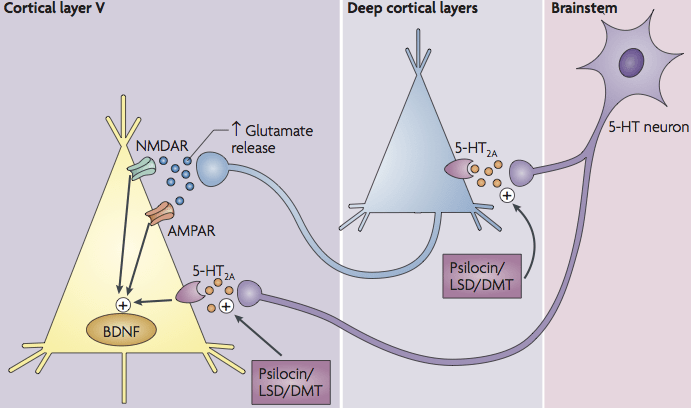
Our truffle therapy and BDNF
During our trip therapy, we use psilocybin-containing mushrooms or magic truffles. After being converted by the body into psilocine, psilocybin causes a very high stimulation of the 5-HT2A receptor. Due to this stimulation and the release of BDNF caused by the stimulation of the 5-HT2A receptor, the brain enters a state of hyperconnectivity (see image).
During this state of hyperconnectivity, neurogenesis takes place and the conscious brain connects with the subconscious. This allows problems in the subconscious to be resolved, resulting in less stress, which in turn inhibits BDNF. New permanent connections are also made and repair work takes place to remedy the damage caused by depression. Even neurodegenerative diseases can be combated through the activity of BDNF, as new neurons and therefore connections are formed again.
Support us
It is clear that psilocybin is a very powerful and natural medicine against neurodegenerative diseases and depression. High stimulation by psilocybin is called tripping and hallucinations can occur at a higher dose. For the processing of this trip, it is highly advisable to hire a professional “tripsitter” or therapist. Check who is available via the button.
References used:
https://www.ncbi.nlm.nih.gov/pmc/articles/PMC3022308/
http://onlinelibrary.wiley.com/doi/10.1113/expphysiol.2009.048512/full
http://www.sciencedirect.com/science/article/pii/S2095254614001161
https://www.ncbi.nlm.nih.gov/pubmed/27385735
http://journals.plos.org/plosone/article?id=10.1371/journal.pone.0076050
https://www.ncbi.nlm.nih.gov/pubmed/25584253
http://www.nature.com/nrn/journal/v16/n4/full/nrn3916.html
https://www.ncbi.nlm.nih.gov/pubmed/24705269
https://www.ncbi.nlm.nih.gov/pmc/articles/PMC4104707/
https://www.ncbi.nlm.nih.gov/pubmed/23727882
http://www.nature.com/nrn/journal/v11/n9/fig_tab/nrn2884_F1.html
https://www.jstage.jst.go.jp/article/jphs/91/4/91_4_267/_article
https://www.ncbi.nlm.nih.gov/pmc/articles/PMC4104707/
https://www.ncbi.nlm.nih.gov/pubmed/23312069
http://file.scirp.org/pdf/FNS_2013083011411606.pdf
http://www.jneurosci.org/content/30/38/12653
https://www.ncbi.nlm.nih.gov/pmc/articles/PMC3977651/
https://www.ncbi.nlm.nih.gov/pmc/articles/PMC3487856/
https://academic.oup.com/jnci/article/97/3/161/2544132/Sunlight-and-Reduced-Risk-of-Cancer-Is-The-Real
http://journals.plos.org/plosone/article?id=10.1371/journal.pone.0076050
https://www.ncbi.nlm.nih.gov/pubmed/25584253
https://www.ncbi.nlm.nih.gov/pmc/articles/PMC2694409/
https://www.ncbi.nlm.nih.gov/pmc/articles/PMC3448146/
https://www.ncbi.nlm.nih.gov/pubmed/11119686
https://www.ncbi.nlm.nih.gov/pubmed/16533499