
The mechanism of action of LSD
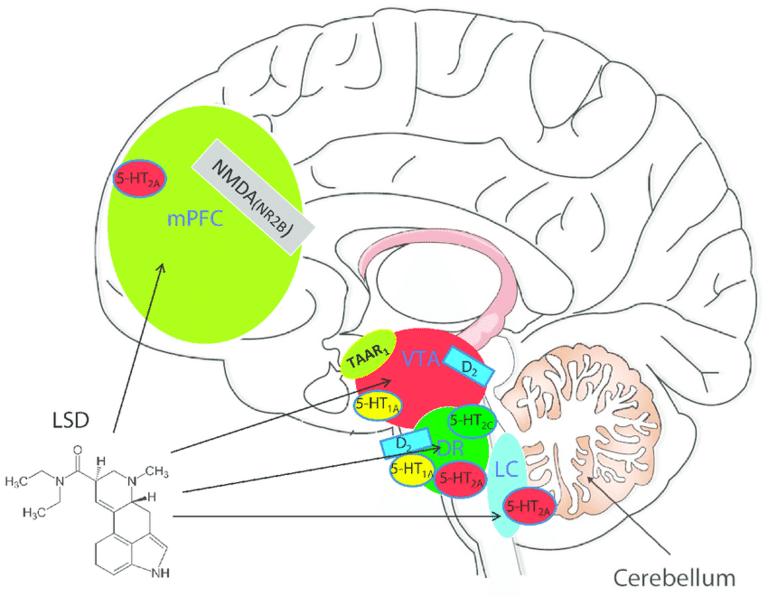
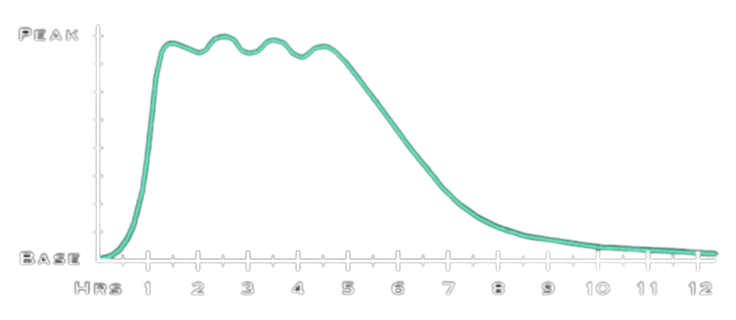
The effects of LSD appear to be very similar to those of other psychedelics, such as mushrooms, DMT, ayahuasca, and many others, in terms of the perception of the person taking it. The mind-altering effects are largely due to the stimulation of the 5HT2a receptors in the brain (the frontal lobe), which are actually stimulated by all psychedelics. However, LSD has a unique potency because it binds much more strongly to these receptors than other psychedelics. This results in a more intense and prolonged experience, with trips lasting up to 12 hours, in contrast to the shorter effects of, for example, psilocybin. The binding of LSD to the 5HT2a receptors leads to significant changes in perception, emotion, and consciousness. This can result in visual hallucinations, increased introspection, and even mystical experiences.
LSD works more powerfully than other psychedelics
LSD can bind much better to the 5HT2a receptors than all other known psychedelics. It seems as if LSD sticks to and attaches to the receptor, causing an LSD trip to often last a very long time. An LSD trip can last between 8 and 12 hours, while other psychedelics like mushrooms generate a trip of between 3 and 8 hours. Additionally, the visual hallucinations can be more intense than what most LSD users expect beforehand.
The disadvantages of LSD
The potential of LSD is also its greatest disadvantage. It seems that of all psychedelics, LSD has the highest chance of causing psychosis. In my opinion, this is primarily because the trip can last so long that eventually the line between what is real and “fake” begins to blur. What is then an illusion and which illusion is an illusion within an illusion? One may become aware during a trip that the life we know may also be a hallucination. Ultimately, the world we see is a representation of what we believe to be seeing.
Other disadvantages could be:
- The trip turns out to be more intense than you had previously imagined.
- Bad trip (fear, panic, restlessness).
- Psychiatric illnesses (depression, psychosis) can worsen, or last longer.
- Wounding yourself in a dangerous or awkward situation.
- In people with a psychiatric illness such as depression or psychosis, LSD exacerbates the condition.
- Subclinical depression and psychoses can surface and cause long-term distress. Medical treatment is then necessary.
- If you have a disease and/or are taking medication, the use of LSD is not recommended. It can have dangerous or very unpleasant consequences. Some types of antidepressant medications (tri-cyclic) lead to an LSD overdose.
- There are reports of users who suffer from long-term visual impairment (HPPD). They see very disturbing abnormalities in color, shape, movement, contrast, etc.
Is IS LSD suitable for microdosing with?
Due to the long-lasting effects of LSD, microdosing is definitely possible. Measuring the dosage precisely is difficult because LSD is so powerful. It is actually micrograms of LSD. That is 1000 times less than milligrams. If the microdosing has already been prepared and corresponds to the desired microdose, dosing is no longer a problem.
Another point of attention is sleep. If you have a harder time sleeping, then LSD is probably too long active and you should either lower the dosage or take the microdosing immediately in the early morning.
Another question is whether you really want to microdose. In the case of depression, burnout, anxiety, etc., microdosing is only a means of suppressing symptoms. If a person develops a depression due to poor lifestyle (which can be caused by diet), if they no longer feel the depression after taking LSD, they will still be eating and living poorly and actually be damaging their body. So, even if you do decide to microdose, try to identify where your improvement points lie.
Is LSD suitable for psychedelic therapy?
LSD may be suitable for psychedelic therapy; people with OCS are more likely to benefit from a LSD session than other groups. However, LSD does have some limitations (due to its intensity and long duration of action) that you do not experience as much as when using psilocybin as a trip drug, for example. LSD is therefore often not the best choice when it comes to a therapeutic psychedelic trip drug. I personally think that a microdosing to low dose of LSD in combination with a higher dose of magic mushrooms, magic truffles or psilocybin can make a positive contribution to the therapeutic effect of trip therapy, because you can actually achieve a longer light afterglow. The combination of LSD with psilocybin is called a wizard flip and produces very colorful and detailed hallucinations while the trip does not last too long, about six hours.