
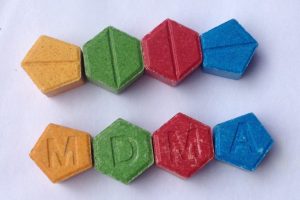
MDMA therapy in the Netherlands against PTSD
Due to the news that MDMA is effective in treating PTSD, which is post-traumatic stress disorder, we're receiving many requests to use MDMA as a psychedelic in therapy. What most news reports fail to mention is that MDMA has several advantages and disadvantages compared to psilocybin treatment. For some, an MDMA session will be the best choice, while for others, psilocybin might be more appropriate. In this article, we'll describe the potential motivations for MDMA therapy.
How does MDMA work?
Half an hour after ingestion, MDMA gradually causes a temporarily high release of serotonin and blocks its reuptake and production. MDMA also blocks the reuptake of the neurotransmitters norepinephrine and dopamine. This effect peaks after 1.5 hours. The effect gradually diminishes, and after 6 hours, MDMA's effects are gone. Serotonin stores in the neurons are then depleted, and its concentration in the brain decreases. Moreover, at higher doses, receptors for signaling substances retract into the cell, making them less sensitive.
The benefits of MDMA therapy
The advantage of MDMA during therapy is that, due to the increased serotonin activity, depressive feelings and anxiety are pushed to the background. When processing PTSD without the overwhelming fear it can cause, one can better think in terms of solutions rather than problems. This can facilitate processing the past. MDMA therapy is often combined with exposure therapy to help the brain make new connections with what previously triggered anxiety.
The disadvantages of MDMA therapy
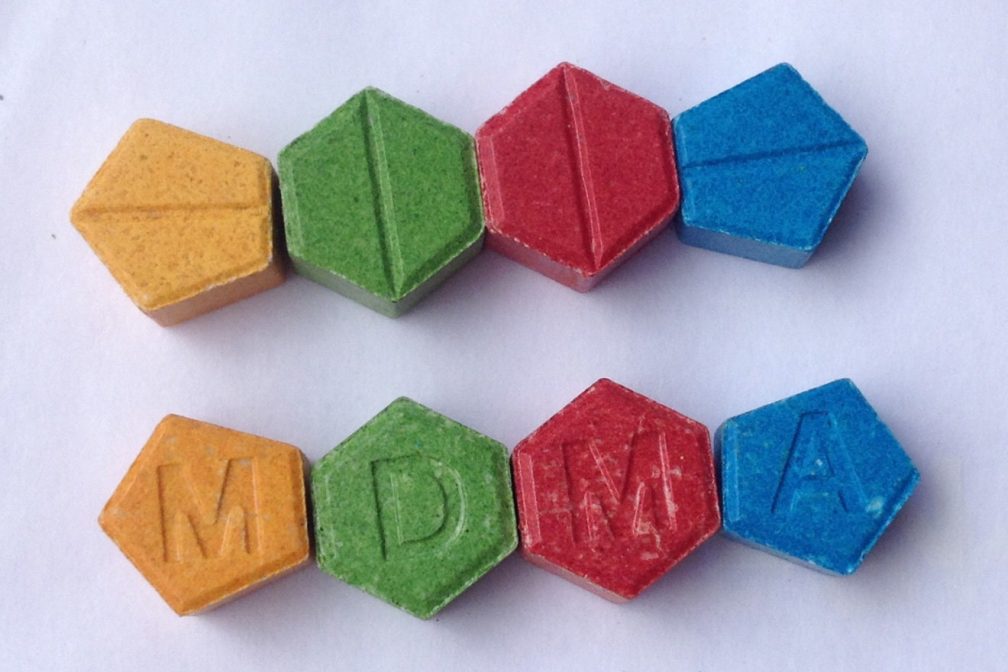
Besides its advantages, MDMA therapy also has its drawbacks. The dip in serotonin levels is caused by serotonin depletion and reduced activation of serotonin receptors. This leads to feelings of depression, recurrent anxiety, and, consequently, PTSD symptoms. Furthermore, MDMA is illegal, and pure MDMA is rarely encountered because it is often mixed with similar substances. High doses of MDMA can cause dehydration, kidney failure, liver damage, and brain damage. During therapeutic sessions, excessive doses should be avoided to minimize negative effects. It is sometimes difficult to determine the correct dosage, as some individuals react differently to MDMA.
An alternative to MDMA therapy
From our experience and looking at the biochemical reactions, we can tell you that MDMA isn't the best psychedelic for treating depression, but it can be useful for PTSD and trauma. Psilocybin offers several advantages, namely increasing the activity of the 5HT2a serotonin receptor. Psilocybin can stimulate the 5HT2a receptor much more than MDMA because psilocybin doesn't deplete the body's own serotonin supply but acts as an extra presence. Furthermore, the receptors don't retract, preventing the mid-week blues. Another advantage is that dopamine doesn't play a role in psilocybin, but does with MDMA. While serotonin creates a sense of togetherness, dopamine makes you feel more like an individual. Partly because of this, and the fact that psilocybin can achieve a much higher stimulation of the 5HT2a receptor, it's easier to induce ego death with psilocybin, while this is nearly impossible with MDMA therapy. An ego death can be incredibly important in processing trauma, resolving anxiety, and combating depression. Especially when depression is a factor, we tend to be more inclined to use psilocybin. If medication is involved, it can mean that MDMA should not be used at all, while psilocybin is often allowed.
Who is an MDMA session suitable for?
An MDMA session can offer more than the aforementioned disadvantages, making it a very useful tool for dealing with PTSD and trauma, for example. MDMA can also be useful in relationship therapy. An MDMA session can help if you want to change triggers that normally trigger anxiety, if anxiety prevents you from talking about your feelings or problems, or if you believe your memory is being blocked by anxiety and therefore unable to process the past. Currently, MDMA therapy is most often used in the treatment of post-traumatic stress disorder (PTSD), where it can help reduce symptoms such as anxiety, flashbacks, and avoidance.
More than just psychedelic therapy
We do more than just guide psychedelic therapy. Before the trip, we create a plan to physically prepare the client for the trip through nutrition, supplements, and exercise. The goal is to help our clients realize that taking good care of yourself is rewarding. This insight only truly becomes clear during the trip, as the trip is more effective due to, for example, heightened sensitivity of the receptors, and because everything suddenly starts to sink in during the trip. During the preparation, we sometimes also assign tasks, the meaning of which often only becomes clear during the trip. These tasks can develop into specific insights as the psychedelics take effect.
What a trip therapy process looks like
We believe that a healthy body provides a healthy foundation for mental health. We do everything we can to address all facets of life, which is why we advise our clients on nutrition, exercise, and supplements. This comprehensive approach for body and mind ensures the best results in both the short and long term. We typically follow a plan like this with most clients:
- Registration/intake
- Advice on nutrition, exercise and supplements based on point 1
- A period of 2-3 weeks to review progress from point 2
- An individual psychedelic session
- Debriefing of the session on the same day
- After about 1-2 weeks, another follow-up meeting
Extras during the sessions
Our psychedelic therapy includes the following extras to enhance the experience, but our therapists can choose additional helpful therapeutic additions:
- Personal preparation
- Individual guidance
- Aromatherapy (during session)
- Musical support
- Integration conversation
Possibilities of trip therapy
The greatest advantage of a trip therapy session is that through introspection (looking inside yourself), we can gently guide you to change your self-image. Many addictions, fears, stress, depression, and other personal problems arise from a (negative) distorted self-image, from unrealistic thoughts, or from subconscious stress, which stems from fears in the subconscious. Treating yourself to the best in terms of nutrition, thoughts, and exercise will have a positive effect during and after the trip, as these lifestyle changes will become logical during the trip. Be good to your body and mind, and they will be good to you in return. You deserve to be the best version of yourself.
What others say about trip therapy
A client's story can often reveal more and more honestly than what we write about ourselves. It appears that approximately 70% of the sessions are successful in achieving the goals they set. Be sure to read our client reviews for more insight:
Are you curious about what we can do for you?
Before you register with us, it's best to learn as much as possible about trip therapy. Triptherapie works best when someone is ready for it. We are, of course, ready to help you if you're ready to make your life more pleasant and healthy through physical health and psychedelic therapy. You can expect the best personal service from us. You can start by completing the free, no-obligation intake form or by contacting us (see footer below).