



What are telomeres?
Telomeres are the protective caps at the ends of our chromosomes. Each time a cell divides, they shorten slightly, and eventually this protective layer wears away. Shorter telomeres are associated with aging and chronic diseases. Therefore, many scientists are searching for ways to keep these "end caps" as long as possible.
Now, psilocybin has been shown to protect and even lengthen telomeres. In this blog post, we'll share the latest findings on how magic mushrooms and truffles can contribute to healthy aging.
The psilocybin–telomere hypothesis
In 2020, an article launched the psilocybin-telomere hypothesis. The idea: psilocybin could protect or even increase telomere length, keeping cells healthy longer. This hypothesis made sense. People with better mental health often have longer telomeres. While plausible, there was still no scientific evidence to support this theory.
New research in 2025
A team of researchers from Emory University and Baylor College of Medicine published a groundbreaking study in July 2025. They treated human fibroblasts (connective tissue cells) with psilocin, the active metabolite of psilocybin, and observed that the lifespan of these cells increased by 29 % at a dose of 10 µM. At a higher dose of 100 µM, the increase was even 51 % to 57 %. The cells continued to divide longer and showed fewer signs of aging, such as shortened telomeres and increased oxidative stress.
Interestingly, telomere length was maintained in psilocin-treated cells. While control cells saw their telomeres shrink, the telomeres in the treated cells remained the same length. This is the first indication that psilocybin can slow the wearing down of these protective caps.
Research with mice
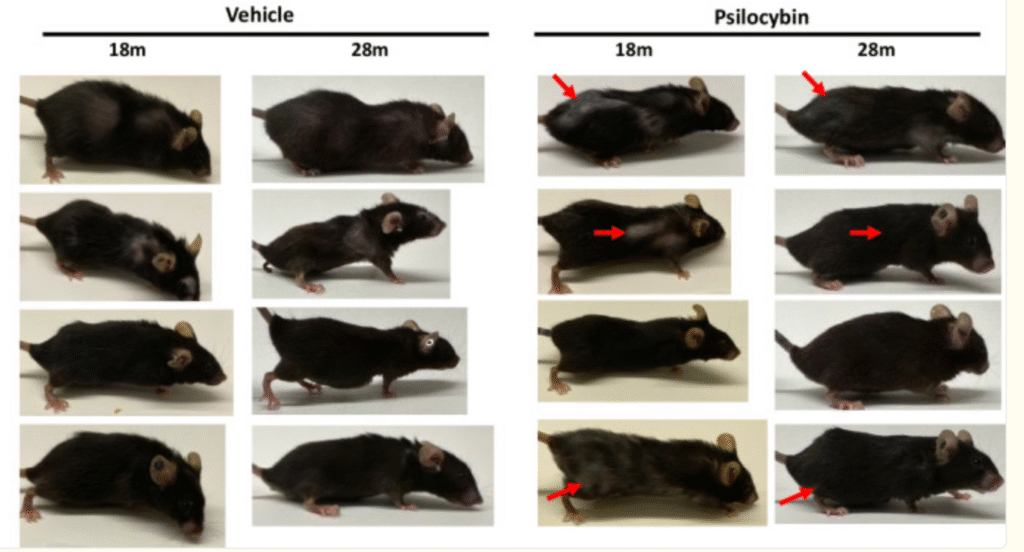
In addition to the cell studies, the scientists investigated the effects of psilocybin on the entire organism. They initially gave elderly mice (comparable to humans aged 60–65 years) a low dose (5 mg/kg) and then a higher dose (15 mg/kg) monthly for ten months. At the end of the experiment, 24 of the 30 treated mice had survived, compared to only 14 of the 28 in the control group. It was also noted that the mice had improved coat quality and fewer gray hairs.
More SIRT1 enzymes
In addition to the extended lifespan and reduction in gray hair, the researchers found higher levels of SIRT1, an enzyme that helps repair cell damage and is known for its role in regulating aging. The improvements in lifespan were therefore associated with a more favorable biochemical profile.
SIRT1 contributes to cellular youthfulness by activating TERT, the enzyme that produces telomerase, which can lengthen or stabilize telomeres, and through cooperation with shelterin complexes such as TRF2 to maintain telomere structure, while simultaneously reducing oxidative damage.
In shortSIRT1 activates more TERT, which in turn increases telomerase production. Telomerase is an enzyme complex that can maintain or extend telomere length. It adds specific DNA repeats (TTAGGG in humans) to the ends of chromosomes, slowing or reversing telomere shortening during cell division. The mouse study indicates that SIRT1 is indirectly responsible for DNA rejuvenation.
SIRT1 features
SIRT1 enzymes have even more functions related to DNA protection. For those interested, we've included a table below with several SIRT1 functions:
| Functional area | Effect of SIRT1 | Mechanism / Comments |
|---|---|---|
| DNA repair | Promotes DNA repair | Activates proteins such as Ku70 and WRN involved in double-stranded DNA break repair |
| Telomere maintenance | Supports telomere stability and elongation | Activates the protein TERT (telomerase reverse transcriptase); protects telomere structure |
| Aging & lifespan | Slows down cell aging | Regulates gene expression through deacetylation; activated during calorie restriction |
| Metabolism & energy | Increases fat burning and insulin sensitivity | Activates PGC-1α (for mitochondria) and inhibits PPAR-γ (fat storage) |
| Brain function & neuroprotection | Increases BDNF, reduces neuroinflammation | Protects neurons by inhibiting oxidative stress; relevant in Alzheimer's and Parkinson's disease |
| Stress response & survival | Protects cells against oxidative and metabolic stress | Deacetylates p53, FOXO3a and other stress-related proteins |
| Epigenetics | Alters gene expression via histone deacetylation | Changes chromatin structure → genes for repair and survival become more active |
| Anti-inflammatory | Inhibits chronic inflammation | Suppresses NF-κB, a key regulator of inflammatory genes |
| Therapeutic target | Target for anti-aging and metabolic disease control | Activated by resveratrol, NAD⁺ boosters (such as NMN and NR), fisetin, pterostilbene, quercetin |
Potential benefits
For people with metabolic disorders (such as type 2 diabetes) or age-related diseases, a higher dose of psilocybin may be particularly interesting. This is because psilocybin at high doses not only deepens mental perception but may also improve cellular function. If psilocybin can indeed increase telomere length, as the research suggests, then people with the conditions listed below may benefit from psilocybin treatments.
| Disease or condition | Description |
|---|---|
| Idiopathic pulmonary fibrosis (IPF) | Serious lung disease with scarring of lung tissue. |
| Aplastic anemia | Bone marrow failure syndrome in which too few blood cells are produced. |
| Dyskeratosis congenita | Hereditary disease with skin, nail and bone marrow problems due to a telomere defect. |
| Leukemia (e.g. AML, CLL) | Some forms are related to telomere loss in stem cells. |
| Myelodysplastic syndrome (MDS) | Disturbance in the production of blood cells due to bone marrow problems. |
| Liver cirrhosis / liver fibrosis | Too short telomeres can prevent liver cell regeneration. |
| Pulmonary emphysema (non-smokers) | More common in people with telomere diseases, even without a history of smoking. |
| Early osteoporosis | Loss of bone mass at a relatively young age. |
| Type 2 diabetes | Shortened telomeres are more commonly seen in people with insulin resistance. |
| Cardiovascular diseases (including atherosclerosis) | Telomere shortening is associated with vascular aging. |
| Neurodegenerative diseases | Like Alzheimer and Parkinson (possibly related to telomere erosion). |
| Early hair graying and skin aging | Especially visible in genetic telomere disorders. |
Perspective
The idea that "magic mushrooms and truffles" not only expand consciousness but also potentially keep cells young is appealing. Recent research shows that psilocybin extends cell lifespan and protects telomeres. While this is highly plausible, further research is needed to determine exactly what it does to humans.
At Triptherapie, we continue to monitor developments. For now, the main reasons for working with psilocybin remain its other biochemical mechanisms of action, its psychological and spiritual benefits. The fact that psilocybin may also slow biological aging makes our work even more interesting. As soon as more research becomes available, we will be happy to share our insights with you.
Other mechanisms of action of psilocybin
We've known for some time that psilocybin does much more biochemically than just induce the trip and that it may rejuvenate cells through other pathways. Psilocybin increases BDNF, neurogense, reduces inflammation, and can protect pancreatic cells in diabetes. All these effects of psilocybin contribute to its antidepressant effects at the cellular level. You can read articles about the various mechanisms of action using the buttons below.
Psilocybin session at Triptherapie
When you participate in a psilocybin session at Triptherapie, we also consider your goals. Are you considering a session for the potentially rejuvenating properties of psilocybin? We'll help you with additional tips related to your goals. For example, adding fisetin to your diet or as a supplement. Fisetin Can work synergistically with psilocybin to promote cell rejuvenation. The more you do well around your psychedelic session, the better psilocybin can do its work.