
Psilocybin and LSD for more neurons
Neurochemistry and BDNF
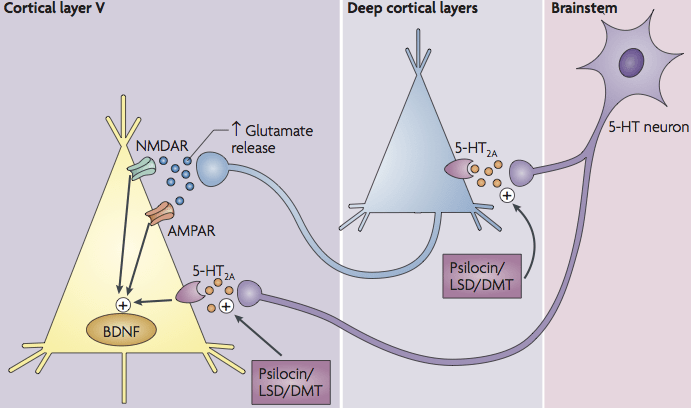
BDNF stands for Brain Derived Neurotrophic Factor and is a protein that stimulates the growth and survival of nerve cells in the brain. Both psilocybin and LSD are known to be able to increase the release of BDNF. This is because these substances bind to serotonin receptors in the brain, triggering a chain reaction that leads to the release of BDNF.
When BDNF is released, it stimulates the growth of new nerve cells and synapses in the brain. This can lead to improved cognitive functions, such as memory and learning ability. BDNF has also been shown to help treat depression, anxiety, and addiction disorders.
It is not yet fully understood how psilocybin and LSD work in the brain, but the increase in BDNF is one of the promising effects that have contributed to research into the therapeutic potential of these substances.
Glutamate also helps
Glutamate is an important neurotransmitter that occurs throughout the brain and is involved in various neuropsychiatric disorders. It also plays a crucial role in neuroplasticity, which refers to the brain's ability to reorganize and adapt to changing environments. Glutamate activates N-methyl-D-aspartate (NMDA) receptors, leading to changes in synaptic transmission and the ultimate formation of new synapses in the brain. It also increases the expression of growth factors such as the aforementioned BDNF, which contributes to the survival and growth of neurons. Therefore, in the right place in the brain, such as the hippocampus, glutamate plays an important role in learning, memory, and overall neuroplasticity. However, excessive glutamate can lead to neuron hyperexcitement and neurotoxicity, which can lead to various neurological disorders such as stroke and epilepsy.
5HT2a receptor
The transformation of gene expression in various brain cells is triggered by the interaction of psychedelics such as psilocybin and LSD, which have a strong affinity for 5HT2a receptors. The resulting increase in the release of BDNF and glutamate further changes the physiological state of the brain, contributing to the various effects of these substances. There are more aspects involved in the use of substances such as psilocybin.
Psychedelics against neurodegenerative diseases?
Psilocybin and psychedelics have potential therapeutic use in neurodegenerative disorders such as multiple sclerosis (MS) and Parkinson's. This is because these substances can increase neuroplasticity, enabling the brain to adapt and create new connections. Neuroplasticity is the ability of the brain to adapt and change by creating new neural networks or strengthening existing ones. In neurodegenerative disorders, the brain is damaged and these mechanisms can be limited. This can lead to symptoms such as tremors, stiffness, and difficulty moving.
Studies have shown that treatments with psilocybin and psychedelics can increase neuroplasticity and even create new neural connections. This can lead to improvement of symptoms and improvement of the overall quality of life in patients with neurodegenerative disorders. Although more research is still needed to determine the effectiveness and safety of these treatments, psilocybin and psychedelics offer hope for people with neurodegenerative disorders who are currently struggling with limited treatment options and improved symptoms.
Neuroplasticity in depression
Research has shown that increased neuroplasticity can help alleviate depression because it can lead to a reconfiguration of the reward and emotion systems in the brain. In people with depression, this system is often disrupted. Through increased neuroplasticity, new neural pathways can be formed that help restore this dysfunction. In theory and according to various scientific studies, psychedelics such as psilocybin and LSD can help with depression.
New neuro-configuration against anxiety symptoms
Achieving a new neuroconfiguration is a result of psychedelic therapy and involves retraining the brain to better cope with anxiety symptoms. The idea is that anxiety symptoms arise from incorrect patterns in the brain, which can be changed by learning new, healthy patterns. The best results are achieved when these techniques are applied in the limbic system, the part of the brain responsible for emotions, motivation, and memory. This area is crucial in the onset and maintenance of anxiety symptoms. A changed neuroconfiguration can be effective for people who suffer from anxiety symptoms and can help them feel more peace and relaxation in daily life again.
Ready for a psychedelic session?
Psychedelic sessions are not suitable for everyone, and there are several contraindications that must be considered before deciding to participate in a psychedelic experience. Individuals with a history of mental disorders such as schizophrenia, bipolar disorder, or psychotic episodes should be cautious when using psychedelics. Also, individuals with a history of cardiovascular diseases, high blood pressure, liver or kidney disorders should be cautious when using psychedelics. Additionally, individuals taking medications such as antidepressants, antipsychotics, or blood pressure medications should be cautious when using psychedelics due to potential interactions between the medications. Finally, pregnant women and women who are breastfeeding should avoid the use of psychedelics due to possible negative effects on the baby. It is therefore important to properly check whether you can undergo a psychedelic session. Use the intake form below so that we can screen for known contraindications to substances such as MDMA, LSD, psilocybin, and psilohuasca (psiloflora).