
Psilohuasca ceremony with truffles: efficacy and safety
A psilohuasca ceremony combines psilocybin-containing truffles with a plant preparation that may contain harmala alkaloids, such as a preparation based on Banisteriopsis caapi. The combination is used by people interested in a more intense or longer-lasting psychedelic experience.
The addition of an MAO-inhibiting agent can affect the effects of psilocybin. As a result, psilohuasca is not simply the same as a regular truffle ceremony with an additional ingredient. The potential effects, risks, and interactions are different and require a more comprehensive intake.
Therefore, psilohuasca Triptherapie can only be administered after individual screening. A psilohuasca experience is not a recognized medical treatment and does not replace regular psychological or medical care.
What is psilohuasca?
During a psilohuasca ceremony, psilohuasca is served, which causes a psychedelic journey. psilohuasca is a unique combination of psilocybin-containing truffles or mushrooms and the liaan used in ayahuasca is Banisteriopsis Caapi. Psilocybin is in itself a powerful psychedelic substance that can induce altered states of consciousness that can promote healing, growth, and transformation. Psilocybin can help you access your subconscious mind, release emotional blocks, gain insights, and connect with your true self. By adding the MAO inhibitor Banisteriopsis Caapi, the effects of psilocybin can be amplified, prolonging, deepening, and clarifying the trip.
Spiritual effects of psilohuasca
The people who choose psilohuasca over the truffle ceremony are more often looking for spiritual and mystical experiences. First of all, the psilohuasca during the ceremonies often contains higher doses of psychedelic substances than the truffle ceremony. The amplifying effect of the added MAO inhibitor above psilocybin also contributes to the depth of the trip. Furthermore, the Banisteriopsis Caapi has a sacred status in different cultures and the plant is often used in religious and spiritual rituals. Often, customers choose the psilohuasca ceremony with the intention of having a mystical experience. We then already help with the preparation by adapting it to include a spiritual character. A minor disadvantage of psilohuasca is the additional physical discomforts.
Free choice of psilohuasca, psiloflora or psilocybin
During the truffle ceremonies we organize, we give everyone the option to choose to add supplements. This way we can make each truffle ceremony a psilohuasca ceremony by adding Banisteriopsis Caapi. Psiloflora is also possible, because then we add Passiflora Incarnata. For those who prefer no supplements or who cannot take them due to medication, we can increase the dosage of psilocybin so that the supplements are not even necessary to cause a strong and deep trip. However, when booking a ceremony it is advisable to specify the preference for a combination so that we can provide the appropriate dietary advice.
Difference between psiloflora and psilohuasca ceremony
Psilocybin is responsible for the hallucinogenic effects of both psiloflora and psilohuasca. MAOi, or monoamine oxidase inhibitors, are substances that slow the breakdown of certain neurotransmitters, thereby prolonging their activity and thus having a greater effect. Both psilohuasca and psilocybin are combinations of psilocybin and an MAOi, which are used for spiritual and therapeutic purposes. By combining psilocybin with MAOi, the effect of psilocybin is enhanced and prolonged, allowing the user to have deeper and more intense experiences. As an added benefit, rich and intense visual hallucinations are often mentioned.
Psilohuasca is prepared by combining psilocybin-containing mushrooms or truffles with a MAOi-containing plant that is often used with ayahuasca, the Banisteriopsis Caapi. Psilofflora is prepared by combining psilocybin with milder MAOi from passionflower, Passiflora Incarnata. The advantage of psiloflora over psilohuasca is that psiloflora has fewer risks of increasing blood pressure, causing interactions with other medications or foods, and causing physical discomfort. Psiloflora also does not require a strict diet before or after consumption, as psilohuasca does. Psiloflora is therefore gentler on the body and less likely to cause complications.
The power of passion flower
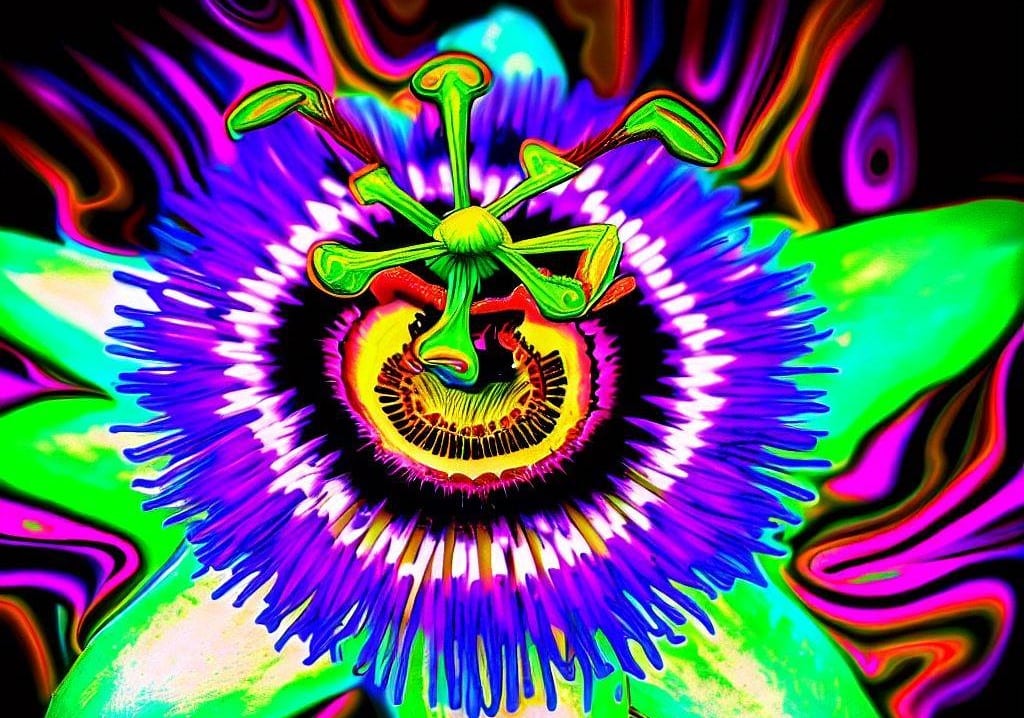
Passionflower has been used for centuries by the indigenous peoples of America as a sedative and sleep inducer. In Europe, passionflower was also introduced as a folkloric medicine for anxiety, nervousness, insomnia, and epilepsy.
Passionflower is beneficial for health because it contains various bioactive compounds that have a beneficial effect on the nervous system, the cardiovascular system, the immune system, and the skin.
The most important MAOi in passiflora incarnata are harman, harmin, harmaline, harmol and harmalol. These substances have a structural similarity with serotonin and can bind to the serotonin and GABA receptors in the brain. As a result, they have a calming, relaxing and antidepressant effect. These indole alkaloids mainly inhibit the MAO-A subtype, which is involved in the breakdown of serotonin and noradrenaline.
Another MAO inhibitor in passiflora incarnata is chrysine, a flavonoid that also has an anti-inflammatory and antioxidant effect. Chrysine mainly inhibits the MAO-B subtype, which is mainly involved in the breakdown of dopamine and phenylethylamine. As a result, chrysine has a stimulating, cognitive enhancing and neuroprotective effect.
Psiloflora versus psilocybin
Psilocybin is considered the psychoactive substance responsible for the psychedelic effects. Although psilocybin has a psychoactive effect, it is relatively small compared to psilocin. Psilocin is found in lesser amounts in mushrooms and truffles but oxidizes more quickly than psilocybin. Most effects come from psilocybin, which is converted into psilocin after ingestion. This process occurs when psilocybin is metabolized by the body. As a result, a molecule loses its phosphate group, resulting in the formation of psilocin.
Psilocybin has a similar structure to psilocybin and serotonin and can easily pass through the blood-brain barrier. This allows it to bind to the serotonin receptors in the brain, leading to the hallucinogenic effects.

Psilocybin is more susceptible to oxidation processes catalyzed by naturally occurring MAO enzymes after conversion from psilocybin. Oxidized psilocybin and psilocybin lose their psychoactive effects. An MAO inhibitor like passionflower keeps the MAO enzymes busy, which allows psychedelics to remain active longer and requires fewer of them in proportion. An additional benefit of psilocybin is the aforementioned sedative effects that provide a calm dreamy trip.
Contraindications psilohuasca
When using psilohuasca, there are more contraindications than with the use of psilocybin alone. We must first assess whether it is suitable for our participants. First, the contraindications for psilocybin remain valid, as psilocybin is part of the mix. As an additive, there are restrictions on the use of the strong MAO inhibitors.
- Pregnancy
- Kidney diseases
- Diabetes
- Epilepsy
- Neurological disorders
- High blood pressure
- Cardiovascular diseases
- Cerebral hemorrhages
- Adrenal problems
- Abnormal blood cells
- Schizophrenia
- Psychosis susceptibility
- Borderline
- SSRi: citalopram (Cipramil®) – escitalopram (Lexapro®) – fluoxetine (Prozac®) – fluvoxamine (Fevarin®) – paroxetine (Seroxat®) – sertraline (Zoloft®) etc…
- SNRi: Venlafaxine (Efexor) – Duloxetine (Cymbalta) etc…
- TCA: mitriptyline (Tryptizol®) – clomipramine (Anafranil®) – imipramine – nortriptyline (Nortrilen®) etc….
- Benzodiazepines: oxazepam (Seresta), – diazepam (Valium) – alprazolam (Xanax) etc…
- Anti-asthmatic drugs
- Medications for high blood pressure: (methyldopa, guanethidine, reserpine)
- Buspiron
- Levodopa
- Opoïden (especially Dexromethorphan (is also included in cough syrup), tramadol!) Morphine en Codeine
- Medications for colds, stuffy noses and cough remedies (if they are available) Dexromethorphan of Sympathomimetics contains) (Otrivin® et al.)
- Sibutramine (medication for overweight)
- Sympathomimetics.amphetamines, cocaine, methylphenidate (Ritalin®, Concerta® and Equasym®), dopamine, adrenaline, noradrenaline, isoproterenol)
- Psychedelics such as LSD, MDMA, Ketamine and all other mind-altering substances
- Cannabis or Marijuana
- Amphetamines
- Narcotic drugs
- Ephedra and other strong weight loss agents
- Iboga/Ibogaine (stop taking it a month in advance)
Psilohuasca/Ayahuasca diet
The MAO inhibitors of ayahuasca and psilohuasca can become a problem in combination with certain foods. We recommend following a tyramine-restricted diet. In fact, tyramine can be a problem with strong MAO inhibitors. In the case of psiloflora, adjusting the diet is not necessary, but it is recommended.
Tyramine
Tyramine plays a role in the regulation of blood pressure. An excess of tyramine in your blood can cause high blood pressure, with symptoms such as headaches as a result. Normally, you would not experience these symptoms, because certain enzymes break down tyramine. These enzymes have the collective name monoamine oxidase, abbreviated MAO. When using a lot or strong MAO, the level of tyramine can rise and endanger your health.
Tyramine can be produced under the influence of bacteria. Bacteria form it from the amino acid tyrosine, which is a building block of various proteins. In products containing proteins that are preserved or aged, the tyramine content increases due to the breakdown of tyrosine into tyramine. As a result, old cheese contains much more tyramine than young cheese. Other processing methods of food, including fermentation, fermentation, and smoking, cause an increase in the tyramine content.
Tyramine-restricted diet
Avoid the following foods during the 3 days before the ceremony:
- Vegetables: cabbage
- Herbs: licorice, St. John's wort and ginseng.
- Meat: raw, smoked or prepared with cheese types of meat and fish.
- Sliced meats: sliced and processed meats
- Dairy products: cheese, unpasteurized milk
- Seafood: oysters
- Bread: sourdough bread
- Soy products: tempé, soy sauce, fish sauce, Tamri and Worcestershire sauce
- Drinks: herbal tea with St. John's wort and/or licorice.
- Alcoholic beverages. All alcoholic beverages.
- Yeast: No Marmite, Tartex, beer yeast, bread drink and maggi.
- Ready to go: Everything that isn't fresh daily.
Registration for the psilohuasca ceremony
We ask each participant of psychedelic ceremonies to fill out the intake form. We ask for medical information, intentions, and the intake includes a neurotransmitter test. The filled-in data will be examined and, in the event of the discovery of contraindications, we will report them. In some cases, participation in the psilohuasca ceremony with or without Banisteriopsis Caapi or passion flower addition can still be made with a slight adjustment.
We create a personal preparation and lifestyle plan after a reservation for the ceremony has been made. We also use the data entered during the online intake for this purpose.