



Do you always need psychotherapy with psychedelic therapy?
When people think of psychedelic therapy, This is often automatically associated with psychotherapy. There's a perception that psychedelics are merely a tool and that true healing only occurs through intensive conversations with a psychotherapist. But is this true? Increasing practical experience and scientific insights show that this view is too narrow. For a large proportion of people, the power of psychedelic therapy lies primarily in the biochemical effects of the drug itself and the internal processes it triggers.
The biochemical basis of healing
When we look at the effects of psychedelics such as psilocybin, LSD and ayahuasca, we see powerful processes being activated in the brain and body that directly contribute to recovery and growth. These processes are so fundamental that they occur independently of conversations or interpretations. The biological processes below occur regardless of the form of guidance.
BDNF increase
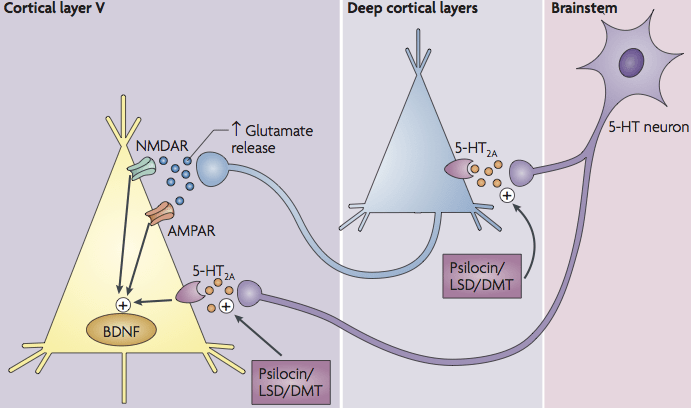
Psychedelics stimulate the production of BDNF (Brain-Derived Neurotrophic Factor), a growth factor essential for neuroplasticity. BDNF promotes the formation of new nerve connections, the strengthening of existing networks, and the repair of damaged neurons. This means the brain literally becomes more flexible and better able to let go of old patterns and develop new ways of thinking and feeling. People often experience this as a breakthrough: sudden clarity, emotional space, or a sense of regaining control over their lives.
mTOR signaling pathway
A second important pathway that psychedelics activate is mTOR (mammalian target of rapamycin). This signaling pathway plays a key role in cell growth and synaptic strengthening. Activating mTOR triggers repair mechanisms that lead to more resilient brain cells, improved signal transmission, and better integration of new experiences. In this way, insights gained during a psychedelic session are given a solid biological foundation in the brain, and the brain functions better overall.
Inflammation reduction
Chronic, low-grade inflammation (neuroinflammation) is increasingly associated with mental health problems such as depression and anxiety disorders. Psychedelics have been shown to be powerful anti-inflammatory properties Systematic reviews of preclinical studies show that in the majority of cases, psychedelics reduce the production of pro-inflammatory cytokines and stimulate a more balanced immune response. This reduces the "noise" in the brain, literally creating more space for clarity, calm, and emotional stability.
Cell rejuvenation
There are indications that psychedelics contribute to rejuvenation even at the cellular level. Recent studies, for example, show that psilocybin leads to an extension of human cell lifespan, preservation of telomere length, and reduction of oxidative stress. This is primarily due to increased telemerase enzymes after psilocybin use. In animal studies, this has translated into increased survival rates and improved general health. This indicates that psychedelics go beyond treating symptoms: they address underlying biological wear and tear.
The effect without a therapist
What all of these above processes have in common is that they intrinsic take place. They are not initiated by a therapeutic conversation, but by the interaction of psychedelics with the brain and body. During a session, the nervous system literally gets a second chance: connections are restored, inflammation decreases, and cells are renewed. This allows someone to break through ingrained patterns and experience space for emotional release, insights, or spiritual experiences.
It is precisely this biochemical basis that explains why so many people make enormous progress after a psychedelic experience, even without long-term psychotherapy. The substance itself opens the path to change, and safe and experienced guidance is often sufficient to allow these processes to proceed optimally.
Emotional and spiritual experiences
Besides the biochemical effects, many people experience a deep emotional release, new insights, or a spiritual breakthrough during a session. This can feel like releasing pent-up emotions, seeing a problem from a new perspective, or experiencing a sense of connection with the bigger picture. Such experiences arise from the process itself. The psychedelic state opens doors that normally remain closed.
Many participants report that the experience itself has a healing effect. It's not essential for a psychotherapist to be present to try and capture the feeling in words, as this can blur the deep, inexplicable meaning. Often, an experienced counselor is sufficient to ensure safety, offer practical support, and know what to do if resistance or fear arises.
Why does research place so much emphasis on psychotherapy?
It is striking that scientific publications often discuss psychedelic-assisted psychotherapy. The studies are designed in such a way that psychedelic sessions often involve many hours of psychotherapeutic conversations. This is not only due to the nature of the studies, but also to who conducts them. Many studies are designed by psychotherapists and psychiatrists, who are naturally inclined to combine the effects of psychedelics with their own field of expertise.
This creates the impression that the added value of psychedelics only truly comes into its own when combined with psychotherapy. In reality, this may be a misconception: most people experience significant progress through the biochemical and emotional effects of the drugs themselves, without the need for a long-term therapeutic process.
Fortunately, more and more scientific studies are emerging that demonstrate the positive biological effects of psychedelics, but also highlight the need for a lot of psychotherapy.
Psychedelic-assisted psychotherapy may be valuable
It would be too simplistic to say that psychotherapy never needs to play a role in combination with psychedelic therapy. There are certainly groups of people who do benefit from a combination of both. These are often people who would already benefit from psychotherapy without psychedelics. These are people with more complex backgrounds or those who need specific guidance to effectively integrate the insights gained into their daily lives. Based on our experience, we estimate that 10% of people can benefit more from psychedelic therapy within a fully psychotherapeutic framework. This primarily concerns people with the issues listed below.
Severe trauma
People struggling with deep or multiple traumas, such as complex PTSD, may be confronted with overwhelming memories or emotions during a psychedelic session. While psychedelics have the potential to break through blockages and provide access to repressed feelings, processing these intense experiences is often a lengthy process. In such cases, it can be valuable to work with a psychotherapist in the weeks or months following the session to identify, organize, and integrate these feelings. This way, the session becomes not a standalone experience, but a building block within a larger healing process.
Complex personality disorders
For people with borderline personality disorder or another personality disorder, a psychedelic experience can sometimes amplify unstable emotions or evoke strong identity questions. A therapist can play a key role in structuring and stabilizing these experiences. This is not because the psychedelic experience itself is deficient, but because the complexity of the mental state requires long-term support.
The need for guidance during psychedelic sessions
So scientific research shows that psychedelics also independent therapeutic effects can have, so without formal psychotherapy. Studies with ayahuasca for depression, LSD for pain, and psilocybin or LSD for cluster headaches show that the substances themselves can bring about powerful changes. However, this doesn't mean everyone can do it safely and effectively all on their own. Sometimes a psychotherapeutic program is the right choice, and sometimes you just need practical support.
So there is a spectrum of guidance needs. On the one hand, there are people who find the drug itself sufficient, while others benefit from an intensive psychotherapeutic framework. There are also people who can never safely use psychedelics.
There's a practical middle ground between full-blown psychotherapy and going it alone, consisting of medical screening and checking for contraindications, a safe and supportive set and setting, the presence of an experienced guide or trip sitter (not necessarily a psychotherapist) to monitor safety and dosage, and post-treatment integration check-ins, such as coaching or reflective assignments. This is consistent with most studies that did not use psychotherapy, but did include a safe setting and monitoring.
The distribution of support needs
Based on our practical experience and estimates, the following distribution applies:
25% of people can have a first psychedelic session safely and effectively only do if the dosage is not too high.
60% benefits from support from a psychedelics expert, such as a trip sitter or trip therapist. Various psychologists, coaches, and shamans are also sufficient for good support.
10% has a psychotherapeutic framework necessary due to serious problems.
5% is not suitable for psychedelic sessions due to medical or psychological contraindications.
What do you need?
Everyone who chooses a psychedelic experience does so with their own background, goals, and desires. So there's no universal recipe that works for everyone. What is important, however, is that you ask yourself: What do I need to make this process safe and valuable? We know that actually be physically safe is important, but that yourself feel safe is just as essential during a psychedelic session. Only when both are present can the experience unfold fully.
For some, this primarily means the assurance of having someone nearby who understands what might happen during a session and who is present in a calm and supportive manner. For others, it's crucial that psychotherapeutic aftercare is also available, as old traumas or deep-seated patterns can surface. And yet others feel sufficiently supported by the session itself and the biochemical processes that are initiated.
What Triptherapie can offer
Fortunately, we can already offer a wealth of support during psychedelic sessions in the Netherlands. At Triptherapie, you can choose from various therapists who can provide additional support if you're looking for more of a therapeutic approach to psychedelic therapy. We also have highly experienced trip-sitters and coaches who are skilled at working with deep psychedelic experiences. We're also increasingly hiring mental healthcare professionals, such as psychotherapists and clinical psychologists, who we train to work with psychedelics. This allows us to effectively help and support a wide range of support needs with psychedelic therapies, both now and in the future. Below, you can see which trip-sitters and therapists work with us and their level of experience.

With a background in chemistry, a passion for philosophy, and extensive knowledge of psychology and health, his approach is holistic. Marcel is a full-time trip leader. With over 2,300 guided sessions, Marcel is the most experienced member of our team.

Ronald is a psychosocial therapist and has completed the following training: Jungian Philosophical Therapist, Psychodrama Therapist, Master Voice Dialogue, Transformational Psychology, Internal Family System (IFS), Mindfulness and Compassion Trainer.

Janneke is studying Applied Psychology, is a lifestyle coach, handles initial client contact, develops lifestyle plans, and performs administrative tasks. She also acts as a confidential counselor. In addition to these duties, she is available to facilitate sessions on a limited basis.

As a psychologist, Reineke combines both conventional and alternative care methods. She utilizes various techniques, such as talk therapy, yoga, breathing exercises, and EMDR, combined with the therapeutic effects of psychedelics.

Sascha has a solid foundation as a psychedelic therapist, thanks to her psychology studies, Master's degree in Clinical Psychology, and experience working in addiction treatment, (specialized) mental health care, and rehabilitation as a psychologist. She also has additional training in cognitive behavioral therapy and EMDR.

Gijs has 20 years of experience in outpatient mental health care. He taught and supervised the Mental Health and Addiction Care program at the HAN University of Applied Sciences Arnhem Nijmegen. He also has extensive experience in mindfulness, talk therapy, neurofeedback, meditation, compassion training, and ACT.

Ylva is a BIG-registered GZ psychologist and supports Triptherapie as an advisor in the areas of psychological care, mental health frameworks, safety, and integration. Ylva does not offer psychedelic sessions but is available for additional support.
Complete an intake and discover your path
Because every situation is unique, we always recommend that you first intake form To fill out. Based on this, we can determine together which program is best for you: an individual or group session, with or without additional therapeutic support. This way, we ensure that you are not only safe, but also feel safe, and that you receive the guidance that aligns with your personal journey.