



Psilocybin and Crohn's
A growing number of scientific studies confirm that psilocybin acts as an anti-inflammatory. Most natural treatments for Crohn's disease work because they have anti-inflammatory mechanisms. Could psilocybin, as an anti-inflammatory at the cellular level, offer benefits for people with Crohn's?
What is Crohn's disease?
Crohn's disease is a chronic inflammatory bowel disease that affects the digestive tract. This causes abdominal pain, diarrhea, fatigue, weight loss, and malnutrition. The inflammation caused by Crohn's disease can affect any part of the digestive tract, from the mouth to the anus. These symptoms significantly impact patients' quality of life. Understanding the underlying causes and treatments for this condition is essential for finding a cure.
Possible causes
The causes of Crohn's disease are still not fully understood. However, scientific research has shown that factors such as heredity and a compromised immune system likely play a role in the development of the disease. Furthermore, risk factors such as age, ethnicity, family history, smoking, the use of anti-inflammatory medications, and certain environmental factors can contribute to the development of Crohn's disease. So, we don't yet know everything about this condition, but thanks to scientific studies, we are increasingly understanding how the disease can manifest.
What we do know about Crohn's disease
Measurements have revealed which inflammatory products are present in high concentrations in Crohn's disease. These products include C-reactive protein, interleukin-6, and tumor necrosis factor-alpha. These measurements allow us to better understand the disease and develop targeted treatments that counteract these inflammatory products.
Does psilocybin have an anti-inflammatory effect on Crohn's disease?
According to various scientific studies, psilocybin can specifically reduce the inflammatory processes that are elevated in Crohn's disease. In theory, this seems like a solution to reduce Crohn's symptoms and control the disease. Below, we indicate per topic whether psilocybin can have a positive effect on Crohn's inflammatory processes.
CRP
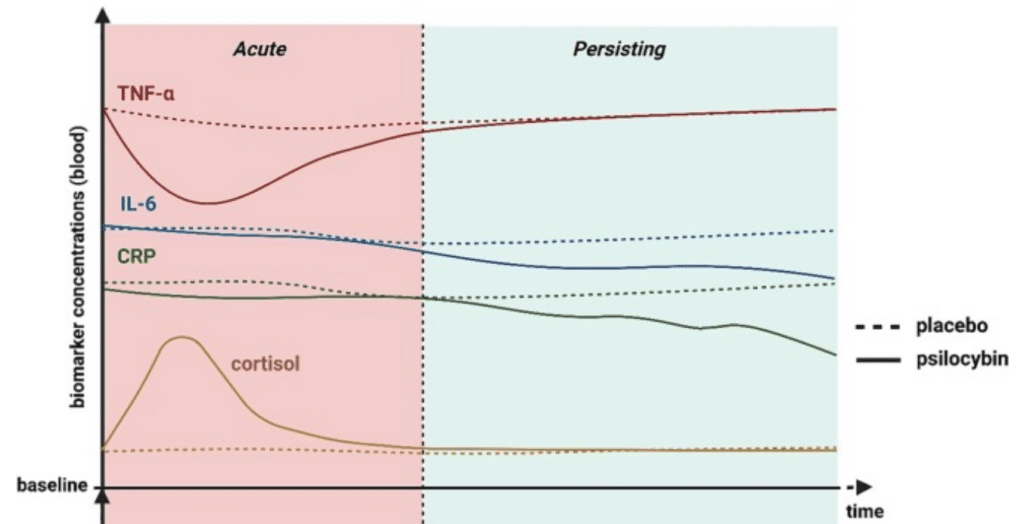
C-reactive protein remains lowered for a long time after psilocybin use.
There is some evidence to suggest that lowering C-reactive protein (CRP) levels may be helpful in treating Crohn's disease. Lowering CRP indicates reduced inflammation.
IL-6
Interleukine-6 is also permanently reduced long-term after use of psilocybin.
Research has shown that lowering IL-6 can reduce or worsen symptoms in people with Crohn's disease. The mechanism behind this is currently unclear, and further research is needed to clarify the situation.
TNF-α
During psilocybin use, tumor necrosis factor-alpha is reduced.
Lowering TNF-α can reduce inflammation and alleviate symptoms such as abdominal pain, diarrhea, and weight loss. Psilocybin primarily reduces TNF-α during high-dose use.
Cautious conclusion about the effectiveness of psilocybin
Reducing intestinal inflammation in Crohn's disease is considered the best solution to counteract its harmful effects. Psilocybin can reduce various inflammatory factors. Whether psilocybin contributes to reducing Crohn's requires further investigation. For example, a previous study showed that blocking IL-6 alone could contribute to disease worsening, which may be due to the selective blockade of IL-6 alone. IL-6 plays a dual role by both inhibiting and promoting inflammation.
Of course, we can't say for sure whether it's wise to use psilocybin for Crohn's disease. We believe psilocybin will primarily have an anti-inflammatory effect on Crohn's, but further research will be needed to tell us more about its effectiveness and safety.
What else can you do?
Besides psilocybin, there are many other things that have anti-inflammatory properties and can therefore help with Crohn's disease. Here's a list of tips for Crohn's.
In science, extracts, plant parts, or herbs are used to treat Crohn's disease. Below are some of the most potent ones:
- Althaea officinales – Marshmallow
- Aloe vera/ferox (juice) – Normal or wild Aloe vera (juice)
- Artemisia absintium – absinthe balm
- Borago officinales (oil) – Borage or cucumber herb (borage oil)
- Boswellia serrata
- Cocos nucifera (oil) – coconut oil (extra virgin)
- Curcuma xanthorrhiza – Javanese turmeric root
- Echinacea purpurea – Coneflower
- Garcinia mangostana – Mangosteen or mangosteen
- Glycyrrhiza glabra – Licorice
- Hydrastis canadensis – Canadian turmeric
- Linum usitatissimum (oil) – Linseed oil
- Matricaria recutita – German chamomile
- Morinda citrifolia – Noni or Indian mulberry
- Oenothera biennis (oil) – Evening primrose oil
- Panax ginseng – Korean ginseng
- Perilla frutecens (oil) – Black nettle oil
- Punica granatum (whole juice) – Pomegranate
- Plantago afra – Psyllium seed
- Plantago ovata – Psyllium seed
- Ribes nigrem (oil) – Blackcurrant oil
- Saccharomyces cerevisiae subsp. boulardii – Yeast
- Ulmus rubra – Red elm
- Uncaria tomentosa – Cat's claw or Cat's claw
Krill oil
Krill oil works well against Crohn's disease because, like fish oil, it has an anti-inflammatory effect on the intestines and the rest of the body.
NAC
N-acetyl cysteine isn't found in our diet, but the body produces it from L-cysteine. N-acetyl cysteine can help with Crohn's disease due to its anti-inflammatory properties, and supplementation is a solution.
The recommended dose of N-acetyl cysteine (NAC) for Crohn's disease is 2000 mg per day, divided into 2 or 3 doses. It is best to take it on an empty stomach with water.
Caution with medication. N-acetyl cysteine (NAC) may increase the effects of antidepressants, nitroglycerin, and anticoagulants. Consult your doctor first if you are taking any medication.
Vitamin D
A vitamin D deficiency is often overlooked, but plays a major role in the functioning of the immune system.
The following foods are pro-inflammatory and should be avoided if you have Crohn's disease:
Sugar: Eating sugar, and fructose in particular. Fructose combined with glucose in a single molecule is what we call table sugar. Avoid added sugar as much as possible. Sugar also causes inflammatory reactions in the body, which reduces the release of serotonin.
Bad fats: Bad fats cause inflammatory responses in the body, which, through inflammatory factors, reduces the release of serotonin and BDNF. Bad fats are typically vegetable omega-6 fats used for frying, such as sunflower, soy, and peanut oil. Hydrogenated (vegetable) fats are also bad fats. Furthermore, do not heat fats beyond smoking and preferably keep the temperature below 180°C.
Dairy: Dairy products can also promote inflammation when consumed in high doses. It's best to avoid sweetened or unsweetened dairy products. Unsweetened kefir or yogurt can be eaten in moderation.
Gluten: Eat as few grain-based products as possible. Gluten can also cause inflammation, especially in allergic reactions. Oats and oatmeal are safe to eat.
Alcohol: Alcohol is fermented sugar and is best avoided entirely. If alcohol is consumed, half a glass to a full glass of wine per day can be consumed without too much harm. Above that level, alcohol is already a pro-inflammatory.
Meat: Wild game, grass-fed meat, and wild fish are fine as long as red meat is eaten in moderation (recommended a maximum of twice a week). Any fish that isn't wild-caught or fed anything other than its natural diet is best avoided. Grain- and corn-fed animal products are also not recommended.
Although allergies are not the direct cause of the disease, they can contribute to the onset and worsening of symptoms. Allergies can activate the immune system and trigger inflammatory responses, which in turn can worsen intestinal inflammation in people with Crohn's disease.
Some studies have shown that people with Crohn's disease may have an increased sensitivity to certain foods, such as dairy products, gluten, and certain food additives. These foods can trigger an allergic or inflammatory reaction in the intestines, which can worsen Crohn's symptoms.
In addition, allergies can also play an indirect role in Crohn's by disrupting the gut flora. A disrupted gut flora can lead to increased permeability of the intestinal wall, making it easier for allergens and other harmful substances to enter the bloodstream and cause inflammation.
It is therefore advisable to avoid allergic reactions as much as possible in case of Crohn's.
Stress can negatively impact the immune system and increase inflammatory responses in the body. Since Crohn's is an inflammatory disease, reducing stress may help reduce inflammation and improve Crohn's symptoms.
There are several ways to reduce stress, such as regular exercise, relaxation techniques like meditation or yoga, getting enough sleep, and avoiding triggers like caffeine and alcohol. It's also important to eat a healthy diet rich in nutrients and fiber, and to drink plenty of water.
Reducing stress also reduces the risk of developing a "leaky gut," or increased permeability of the intestinal wall. When we are stressed, our bodies produce the stress hormone cortisol. Prolonged stress and elevated cortisol levels can cause inflammation throughout the body, including in the intestines. This inflammation can lead to damage to the intestinal wall and increased permeability, allowing unwanted substances such as bacteria, toxins, and undigested food particles to enter the bloodstream.
A “leaky gut” can, in turn, lead to inflammatory responses in the body and can contribute to several health problems, including Crohn's disease.
Psilocybin therapy is known to reduce stress levels and can thus also contribute to a reduced risk of inflammation in the body.
Guided psilocybin session
Guided psilocybin sessions generally work better because the therapist or counselor can support and guide you through the experience. We can help you explore your thoughts, emotions, and experiences and can conduct conversations, offer guided meditations, or use other techniques to help you gain insight and process any issues. They also ensure your physical safety and can help you prepare for and integrate the session.
At Triptherapie we use a step-by-step plan for psilocybin sessions:
1. RegistrationYou can register without obligation using the intake form. Here you can indicate what you want to achieve with the session and mention any medical or psychological conditions.
2. IntakeAfter you register, we will contact you to let you know whether a psychedelic session can take place in your case.
3. AdviceBased on the intake, we provide advice on nutrition, supplements, and exercise recommendations. We can also offer tips to prepare for the session. Following this advice can enhance the effectiveness of the psilocybin session.
4. MonitoringAbout a week before the session, we'll contact you again to discuss the progress and the impact of the recommendations. We can still decide to adjust the schedule if necessary.
5. Psilocybin sessionDuring the session, you'll take a dose of psilocybin, usually in the form of magic truffles. Your chosen therapist will guide and support you during the psilocybin phase. We can use various techniques to help you gain insights and process any issues.
6. Integration: After the session, it's important to integrate the experience into your daily life. We offer support and guidance in this process, for example, through conversations or assignments.